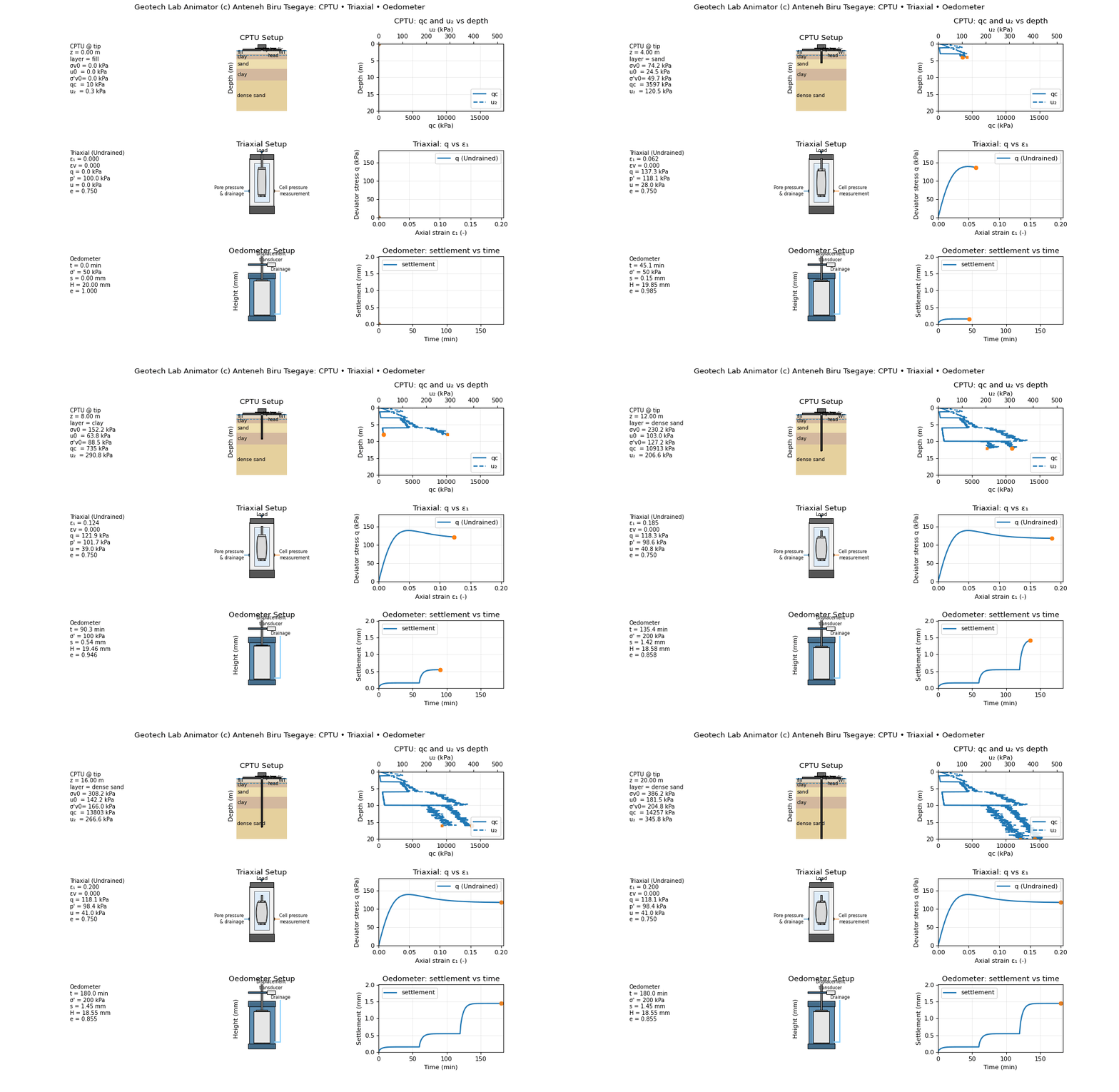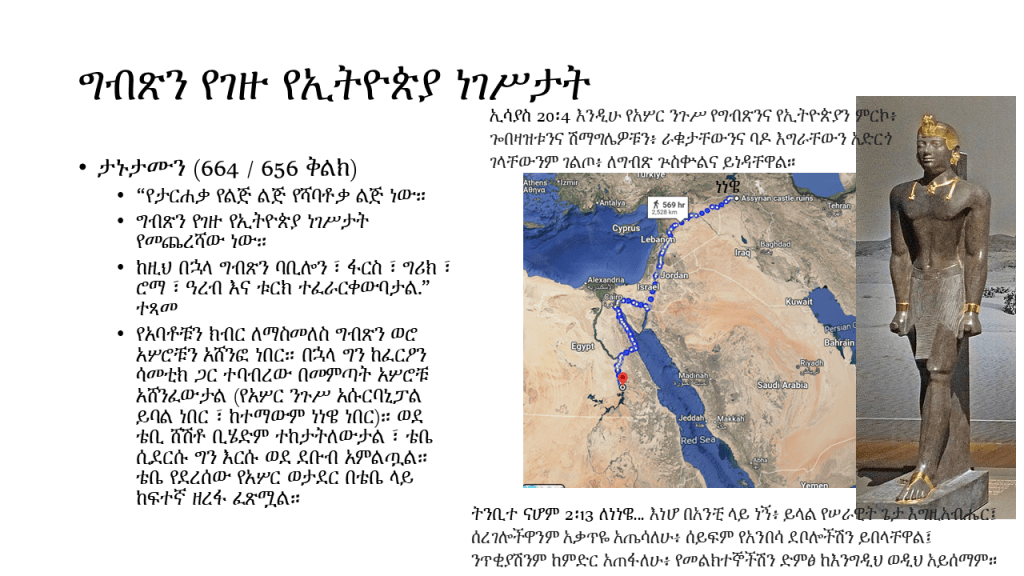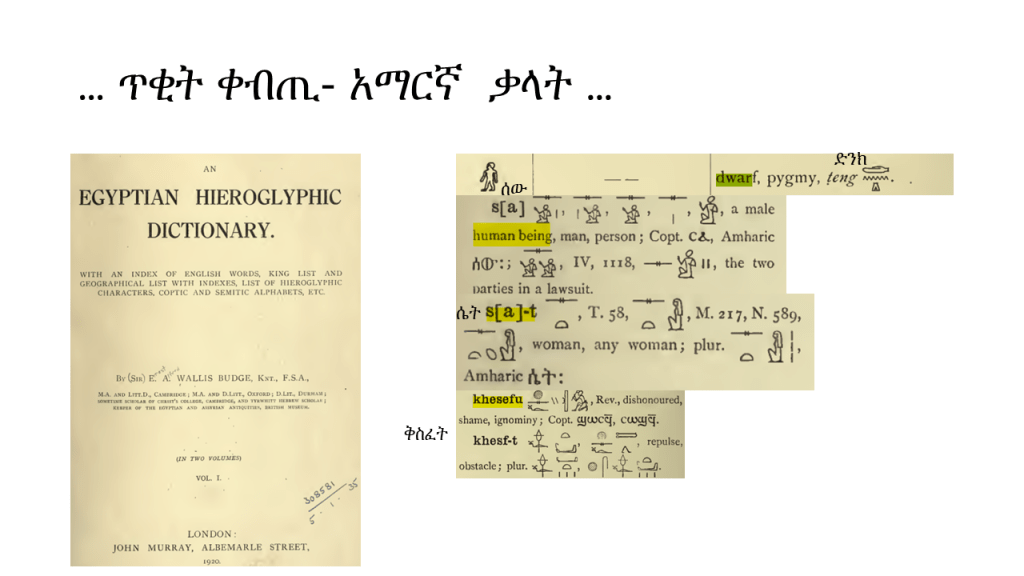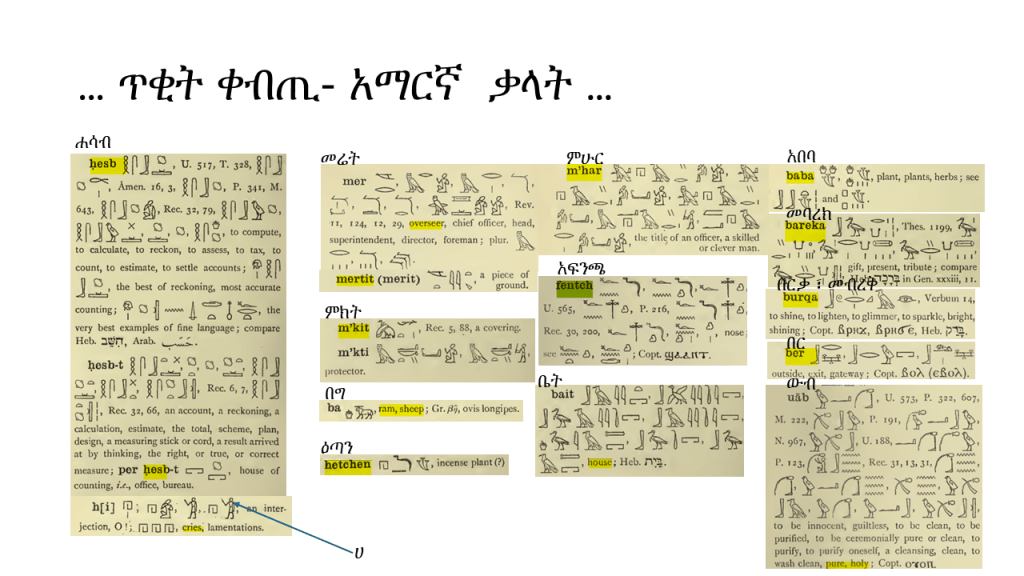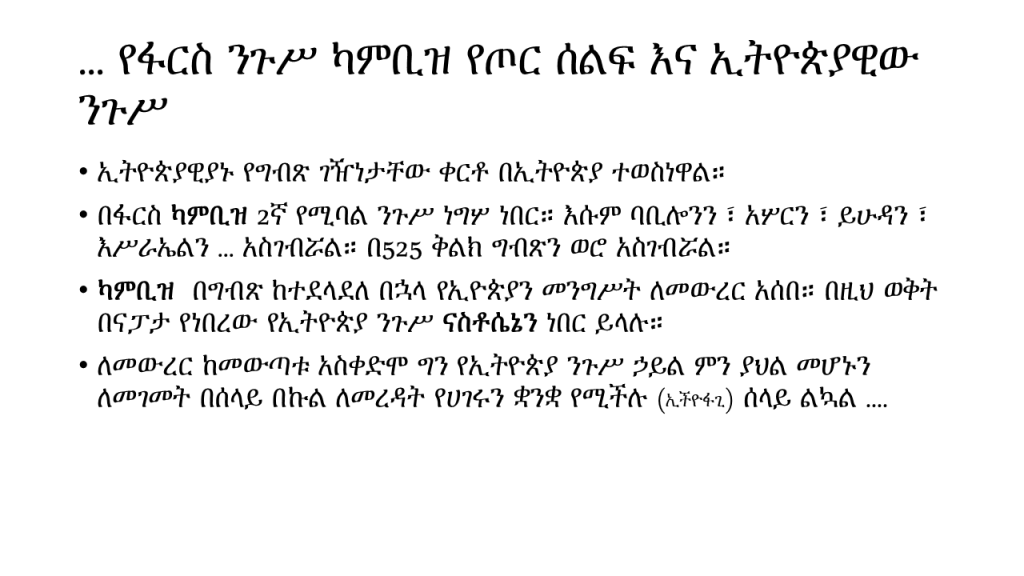
Essential Sand Geotechnical Parameters for use in Advanced Soil Models

This note is a compact reference note that brings together practical definitions, typical value ranges, and commonly used empirical correlations for sand, with frequent pointers to the original literature and a consistent reminder that correlations have limits and should only be applied within their intended scope. The content is organized into four parameter groups, each presented as its own table: (1) dilatancy and strength parameters—including relative density, critical-state and peak friction, dilatancy measures, and CPT-based correlations—intended for simpler strength and deformation descriptions; (2) critical-state and critical-state–based parameters, such as the critical-state void ratio and the state parameter , used to interpret whether a sand is likely contractive or dilative and to support more state-aware assessments; (3) small-strain stiffness parameters for the Hardening Soil Small (HSS) framework, centered on Gmax and strain-dependent stiffness reduction; and (4) intergranular strain overlay parameters used with hypoplastic models when full calibration data are not available. Taken together, the tables function as a practical parameter-selection cheat sheet that links common index and test inputs (e.g., CPT, triaxial results, grain-size descriptors) to parameters used in Mohr–Coulomb (MC), Hardening Soil (HS), Hardening Soil Small (HSS), and hypoplasticity (HP) models, while emphasizing careful, context-aware application and encouraging readers to consult the primary sources.

የመጽሐፈ አክሲማሮስ ሥነቁስ

(ከግምት ነጻ ለመሆን የሚደረጉ የዕውቀት ምርመራዎች አሉ ፣ ከትግበራቸው ውጤት ለኑሮ የሚያስፈልጉ ነገሮችን ለማሟላት የሚደረጉ እንዲሁ አሉ። ይኸ ከመጀመሪያው ዐይነት ይመደባል። …)
የሰው ልጅ አካባቢውን ለመረዳት ብዙ ጥሯል ፣ በዚህ ረገድ ብዙ ርቀት ተጉዟል።

ቁስ ከማይታዩና ከማይከፋፈሉ ጠጣር ድቡልቡል አተሞች የተዋቀረ ነው ፣ ብዙ አተሞች አሉ ፣ ሜካኒካዊ ሕግ ብቻ የሚከተሉና ርስበርሳቸው በብዙ ዐይነት መንገድ የተሳሰሩ ናቸው የሚል መላ ምት የነበረው የአብደራው ዴሞክሪተስ (ዴሞክሪተስ ዘአብደራው ) ነበር ይባላል ። ተቀራራቢ ሐሳብ የሚያቀነቅኑ ጥንታዊ ማኅበረሰቦች ነበሩ። አተማዊያን (atomists) ይባላሉ። አስተሳሰቡ ደግሞ አተማዊነት (atmoism) ይባላል።

የአተማዊያን አስተሳሰብ ሙሉ በሙሉ ተቀባይነት ባይኖረውም ፣ ዘመናዊ ሳይንስም መጠናቸው እጅግ ትንሽ የሆነ[1] መሠረታዊ የሆኑ መሥራች ቅንጣቶች እንዳሉ ይቀበላል (Dalton, Wollaston, & Thomson, 1893)። ለነዚሁ ቅንጣቶች ፣ አተም የሚለውን ስያሜ ጥቅም ላይ አውሏል። ነገር ግን የዘመናችን ሳይንስ አተም ያላቸው መሠረታዊ ቁስ አካላት ቀደምት እንዳተቱት የማይከፋፈሉ አይደሉም። ኤሌክትሮን[2] ፣ ፕሮቶን[3] እና ኒውትሮን[4] ከሚባሉ አተም መሥራች ቅንጣቶች ፣ ትኅተ አተም ቅንጣቶች (subatomic particles) የተዋቀሩ ናቸው ይላሉ። ይኸ የዘመናችን ሳይንሳዊ እሳቤ መሠረት ሆኖ እንደቀጠለ ነው።

በሀገራችን ተተርጉመው ከሚገኙ ቀደምት የሥነ-ቁስ ሐተታዎች በመጽሐፈ አክሲማሮስ የሚገኘውን እንመልከት (መጽሐፈ አክሲማሮስ-ዘስድስቱ ዕለታት, ፲፱፻፺፱ ዕትም)። አክሲማሮስ በ15ኛው መቶ ክፍለዘመን? ከዐረብኛ ወደ ግእዝ የተተረጎመ መጽሐፍ ሲሆን የስድስቱን የፍጥረት ዕለታት የአፈጣጠር ሂደት የሚናገር መጽሐፍ ነው። የአክሲማሮስ ፀሐፊ ኢፒፋኒዮስ ነው ይባል እንጅ ፀሐፊው በውል አይታወቅም ይላሉ። (ኢፒፋኒዮስ በአራተኛው መቶ ክፍለ ዘመን የነበረ ከአበው ክርስቲያኖች አንዱ እና የቅድስና ማዕረግ የተሰጠው አባት ነበር።)

የመጽሐፉን የተወሰኑ ሐሳባት ከግእዝ ወደ አማርኛ ከተተረጎመው መጽሐፍ ላይ የማንበብ ዕድል አጋጥሞኛል። መጽሐፉ የምናያቸው ፍጥረታት ሁሉ ከአራት ባሕርያት የተገኙ እንደሆኑ ያትታል። እነዚህም እሳት ፣ ነፋስ ፣ ውኃ እና መሬት ናቸው ይላል። ይኸን አስተሳሰብ በአሪስጣጣሊስ የፍልስፍና መጽሐፍ ላይም እናገኘዋለን።

የባሕርያቱን ጠባዊ ዝምድና ሲገልጥ

«እሳት ውኃን ያፈላዋል ፣ ውኃ እሳትን ያጠፋዋል ፣ ንፋስ መሬትን ይበትነዋል ይዘረዝረዋል ፣ መሬትም ነፋስን ይገድበዋል ፣ ነፋስ ውኃን ያማታዋል ፤ እንደከበሮ ያስጮኸዋል።»

በተጨማሪም መጽሐፉ እያንዳንዳቸውን ባሕርያት ሦስት ሦስት ግብር ይሰጣቸዋል። እነዚህም

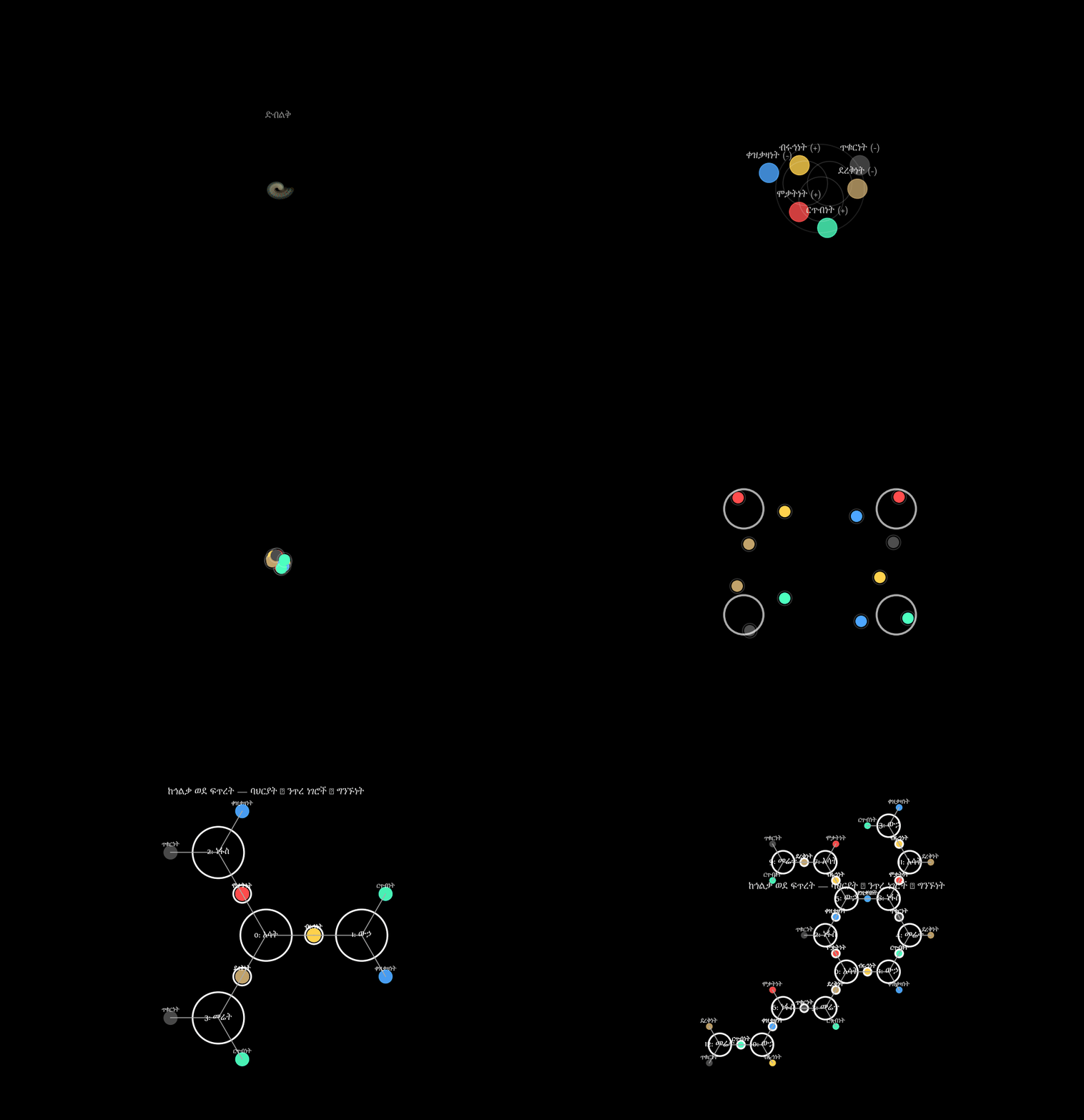
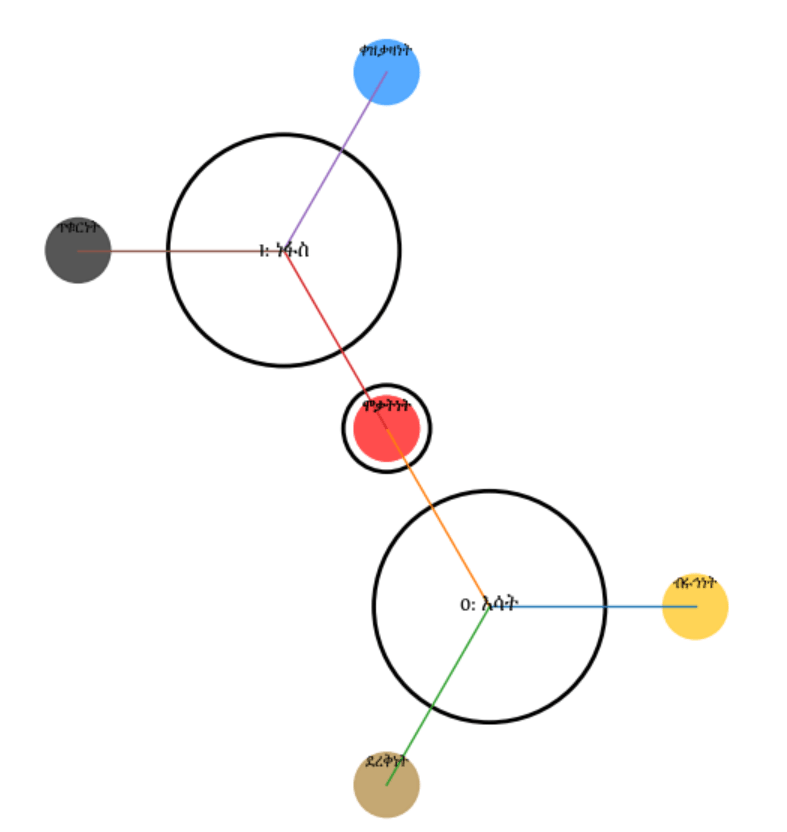
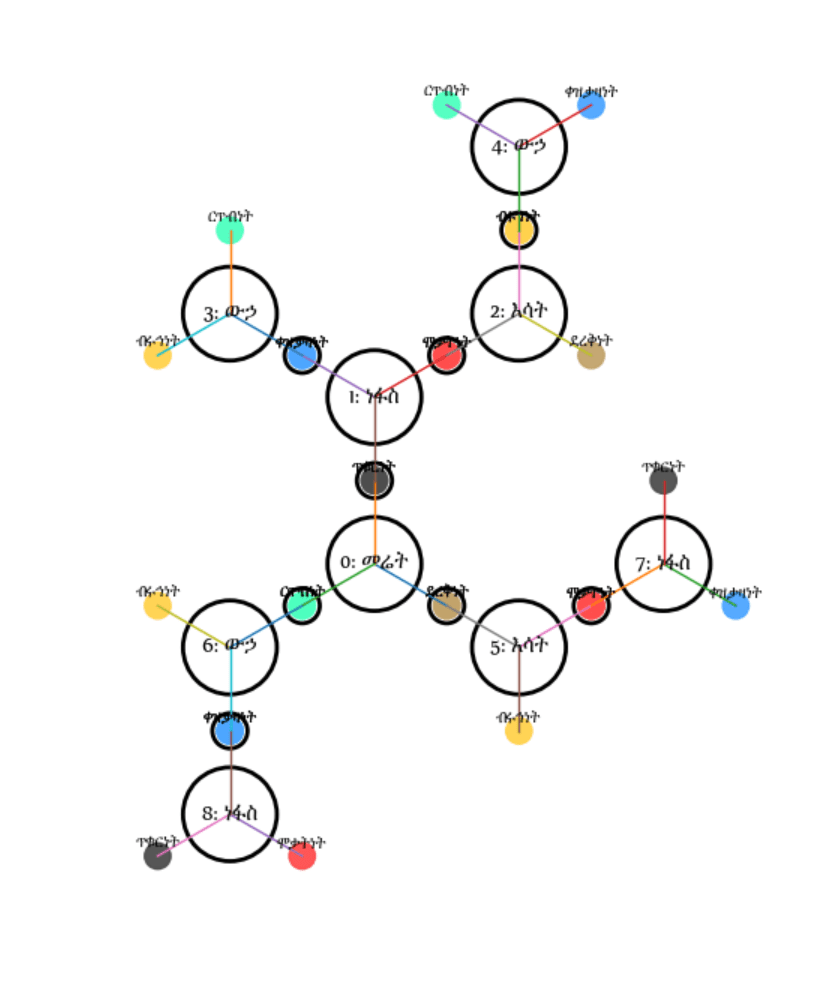
  • እሳት — ብሩኅነት፣ ሞቃትነት፣ ደረቅነት
  • ነፋስ — ሞቃትነት፣ ቀዝቃዛነት፣ ጥቁርነት
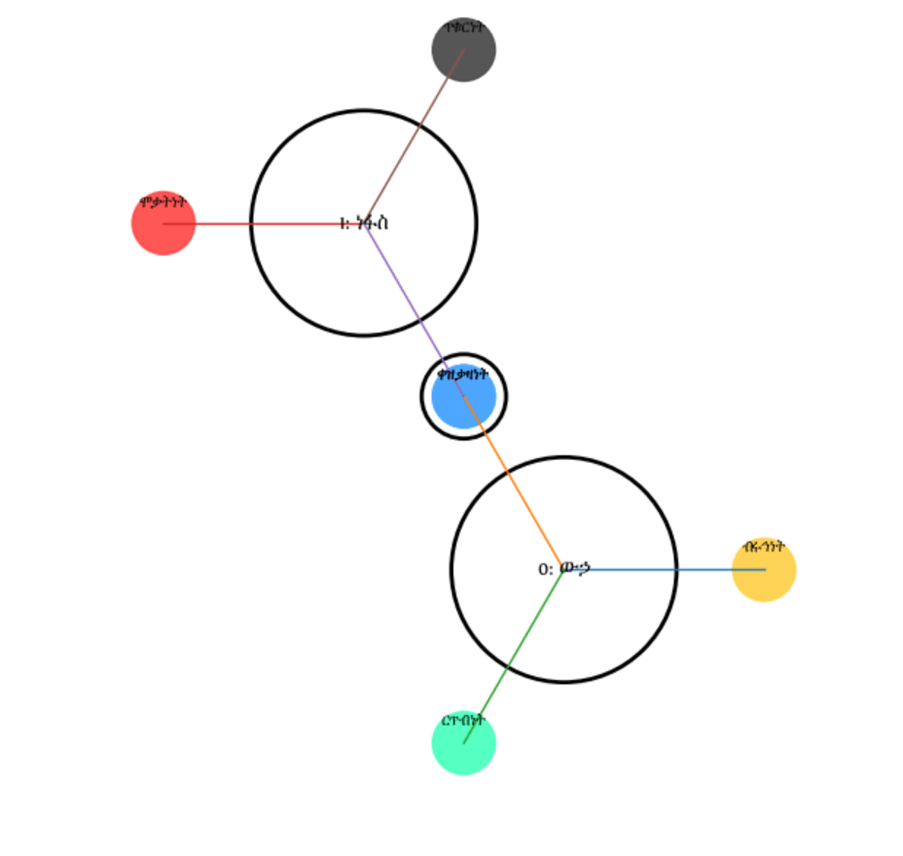
  • ውኃ — ብሩኅነት፣ ቀዝቃዛነት፣ ርጥብነት
  • መሬት — ደረቅነት፣ ጥቁርነት፣ ርጥብነት

እንደዚሁም «ብርሃን ከእሳት የተገኘ ነው። ጨለማ ከበርባሮስ ነው።» ይላል።

እንዲሁም መጽሐፈ አክሲማሮስ እያንዳንዱ ግብር (ቅስም) በሁለት ንጥረ ነገሮች የተያዘ በመሆኑ እያንዳንዳቸው ንጥረ ነገሮች ከቀሪዎቹ ሦስቱ ጋር የሚያመሳስላቸው (የሚያዋድዳቸው) አንዳንድ ባሕርይ እንዲኖራቸው ያደርጋል።

  • እሳት:
    • ከውኃ ጋር በብሩኅነት
    • ከነፋስ ጋር በሞቃትነት
    • ከመሬት ጋር በደረቅነት
  • ነፋስ:
    • ከእሳት ጋር በሞቃትነት
    • ከውኃ ጋር በቀዝቃዛነት
    • ከመሬት ጋር በጥቁርነት
  • ውኃ:
    • ከእሳት ጋር በብሩኅነት
    • ከነፋስ ጋር በቀዝቃዛነት
    • ከመሬት ጋር በርጥብነት
  • መሬት:
    • ከእሳት ጋር በደረቅነት
    • ከውኃ ጋር በርጥብነት
    • ከነፋስ ጋር በጥቁርነት

በዚህ አካሄድም አክሲማሮስ የሚታየው ዓለም መሠረቱ ቅስማዊ ባሕርያት (qualities) ናቸው የሚል ዕይታን የያዘ ነው። ይኸም አስተሳሰብ ቢሆን በአሪስጣጣሊስ ፍልስፍና ውስጥ ከሚገኘው የተቀራረበ ነው። ለምሳሌ አሪስጣጣሊስ ሙቅነት እና ቀዝቃዛነትን ፣ ደረቅነትን እና ርጥንበትን እንደ መሠረታዊ የአራቱ ባሕርያት ቅስማዊ ግብር አድርጎ አቅርቧቸዋል (እሳት፡ ሞቃትነት እና ደረቅነት ፣ ነፋስ፡ ሞቃትነት እና ርጥብነት ፣ ውኃ፡ ቀዝቃዛነት እና ርጥብነት ፣ መሬት፡ ቀዝቃዛነት እና ርጥብነት)። በመጽሐፈ አክሲማሮስ ብሩኅነት እና ጥቁርነትን በመጨመር እያንዳንዳቸው ንጥረ ነገሮች ሦስት ሦስት ባሕርያት እንዲኖራቸው ከማድረጉ በተጨማሪ ፣ የነፋስ እና የመሬት ግብሮች ላይ የተወሰነ ለውጥ አድርጓል። ይኸውም

  • ነፋስን አሪስጣጣሊስ ሞቃትነትን እና ርጥበትን ሲሰጠው ፣ አክሲማሮስ ግን ቀዝቃዛነትን ፣ ሞቃትነትን እና ጥቁርነትን በመስጠት ነፋስ የሙቀት ብቻ ሳይሆን የሙቀትም የቅዝቃዜም አስተላላፊ አድርጎታል ፣ በጥቁርነቱም ብርሃን የማይሰጥ እንደሆነ ያጠቁማል።
  • አሪስጣጣሊስ መሬትን ቀዝቃዛነት እና ርጥብነት አለው ሲል አክሲማሮስ ደግሞ ደረቅነትን ርጥብነትን እና ጥቁርነትን በመስጠት የርጥበት አስተላላፊነትን ሰጥቶታል (እንደ ጭቃ ርጥብ ብቻ ሳይሆን እንደ አቧራም ደረቅ ይሆናል።) እንደዚሁም መሬት በራሱ ብርሃን አመንጭ ወይም አንጸባራቂ አይደለም ሲል ጥቁርነትን ሰጥቶታል።  

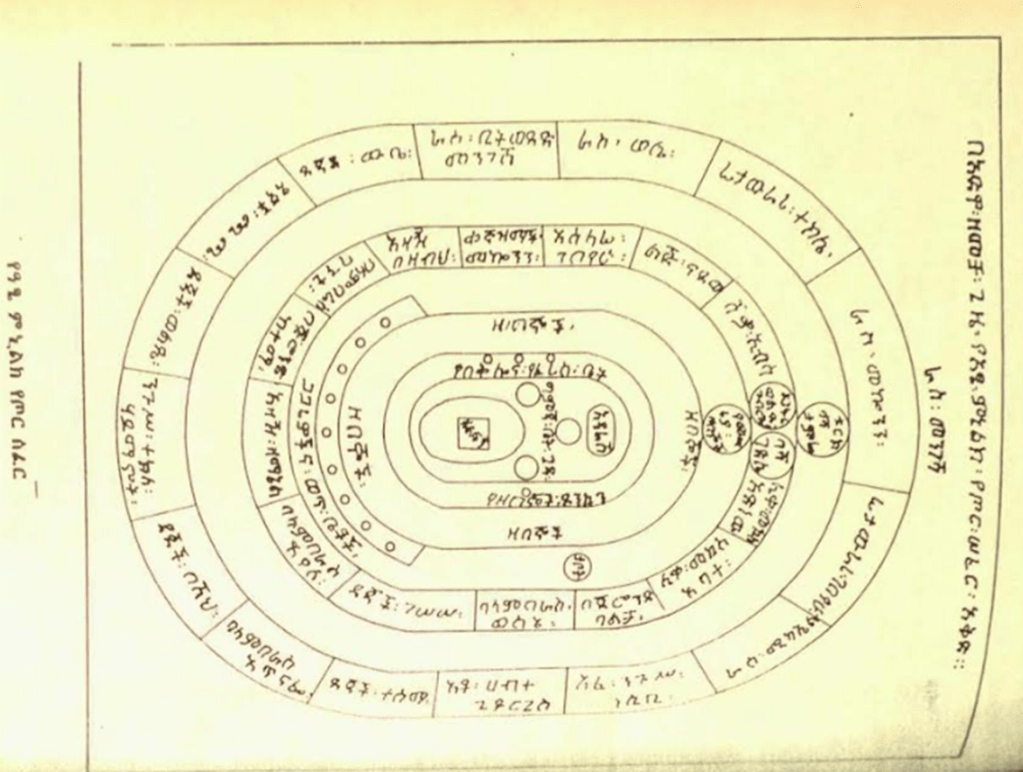
ከዚህ በኋላ ግዙፍ ነገሮችን ሁሉ እንዴት ከነዚህ አራት ባሕርያት እንደተቀመሩ ያትታል። ለምሳሌ ፣ ፀሐይ፡ ከነፋስ እና ከእሳት (በእሳትነቷ ታቃጥላላች ፣ በነፋስነቷ ትንቀሳቀሳለች)፣ ጨረቃ፡ ከነፋስ እና ከውኃ (በነፋስነቷ ትንቀሳቀሳለች በውኃነቷ ታንጸባርቃለች)፣ የሰው ሥጋዊ ባሕርይ፡ ከአራቱም ባሕርያት።

ሥዕል1፡ ፀሐይ

ሥዕል 2፡ ጨረቃ

ሥዕል3፡ ሥጋ

ዋቢ መጻሕፍት

Dalton, J., Wollaston, W., & Thomson, T. (1893). Foundations of the Atomic Theory.

Einstein, A. (1905a). The Photoelectric Effect. Annalen der Physik.

መጽሐፈ አክሲማሮስ-ዘስድስቱ ዕለታት. (፲፱፻፺፱ ዕትም). ባሕር ዳር: አዘጋጅ እና አሳታሚ አባ ሰናይ ምስክር።.

የግርጌ ማስታወሻ


[1] መጠነ ቁሳቸውንና ሥፍራዊ ልኬታቸውን በመለካት ረገድ አንስታይን በብራውናዊ እንቅስቃሴ ላይ ያደረገው ሒሳባዊ ሐተታ ከፍተኛ አስተዋጽኦ አድርጓል (Einstein, 1905a)። የነጠላ አተምን መጠን መወሰን አይቻልም።

[2] ብርሂት ፣ ቀናሲት

[3] ቀዳሚት ፣ ደማሪት

[4] ገለልቲት ፣ ዐልቢት

Hulqu_V0

A few years ago, while studying Abushaker, I developed an algorithm to convert Arabic numerals into Geʿez numerals. I originally implemented the algorithm in Visual Basic and released it as an Excel add-in. I have since rewritten the code in Python (thanks to AI) and added a graphical interface.

This tool may be useful for researchers working with historical Geʿez documents, as well as for anyone interested in learning or studying the Geʿez numeral system. I am therefore releasing version 0 (V0) of the application here.

GeoBer-01: Buckling of piles (release of PBuckling_V0)

Classical pile buckling analysis commonly relies on Engesser’s solution, which assumes a uniform lateral support stiffness along the embedded pile length. While this analytical approach is useful for rapid checks and conceptual understanding, its applicability is limited to idealized soil conditions. In practice, soil stiffness varies with depth and is often characterized by layered profiles in which weak strata of finite thickness are interbedded with stronger layers. In such cases, the governing buckling behavior is controlled not by an average stiffness value, but by the spatial variation of soil stiffness and the corresponding deformation modes of the pile. PBuckle.V0 addresses these limitations through a finite element–based formulation that allows depth-dependent lateral stiffness defined directly by the user, supports piecewise-constant or linearly interpolated stiffness profiles, explicitly captures local buckling modes triggered by weak layers, and accurately identifies the true minimum critical buckling load—even when it occurs at a higher buckling mode rather than the first mode.

PBuckle.V0 is provided as an engineering analysis and research tool intended to support understanding of pile buckling behavior under idealized modeling assumptions. While care has been taken in the development and verification of the program, the results produced are dependent on user input, modeling choices, and assumptions regarding soil and structural behavior. The software does not replace professional engineering judgment, independent verification, or project-specific design checks. Any use of PBuckle.V0 in engineering projects is undertaken at the user’s own responsibility and accountability, and the developer assumes no liability for the application of the results in design, construction, or decision-making processes.

Find the application following the link

https://drive.google.com/file/d/1Gy3PBlHYF4huelK8u9lil0M8_9oPlyst/view?usp=drive_link

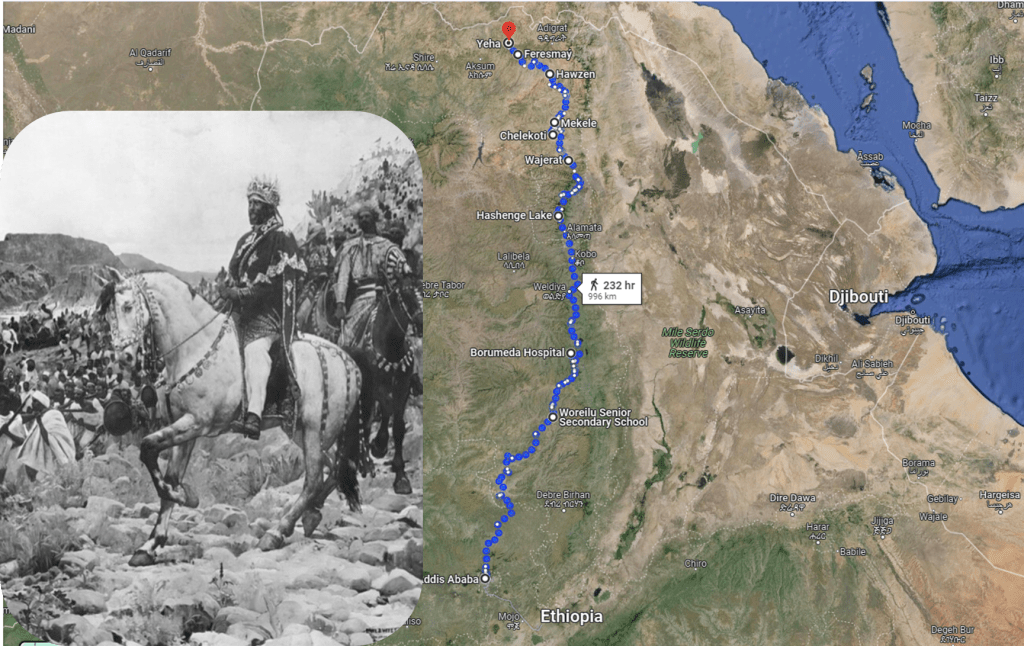
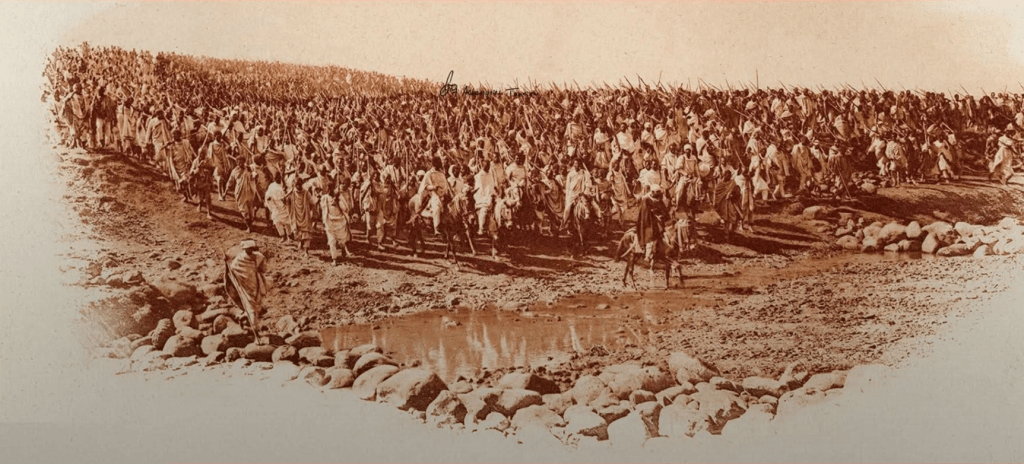
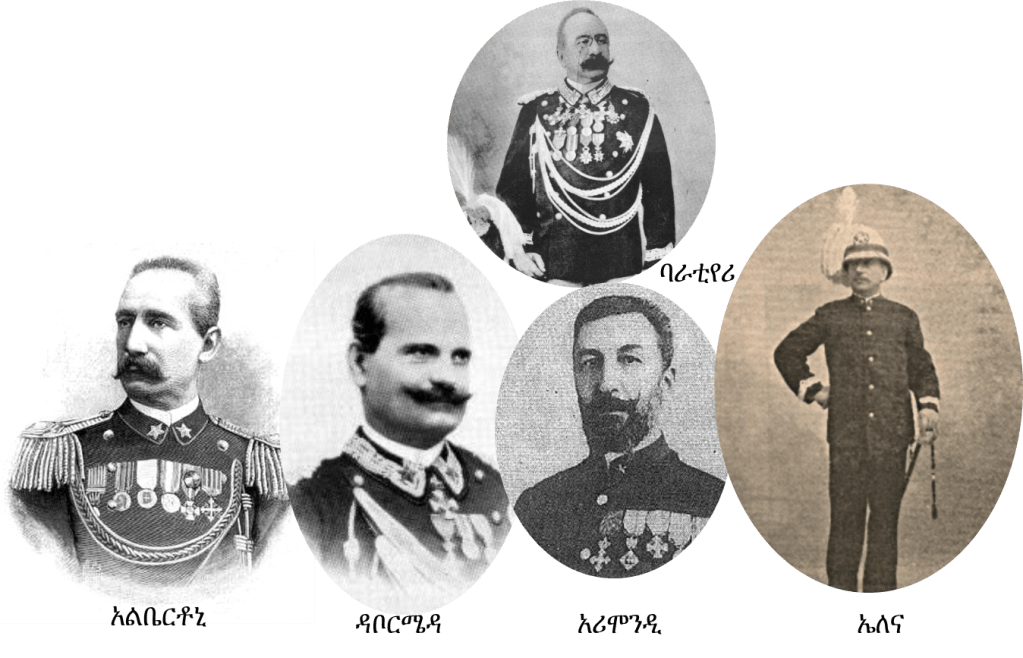
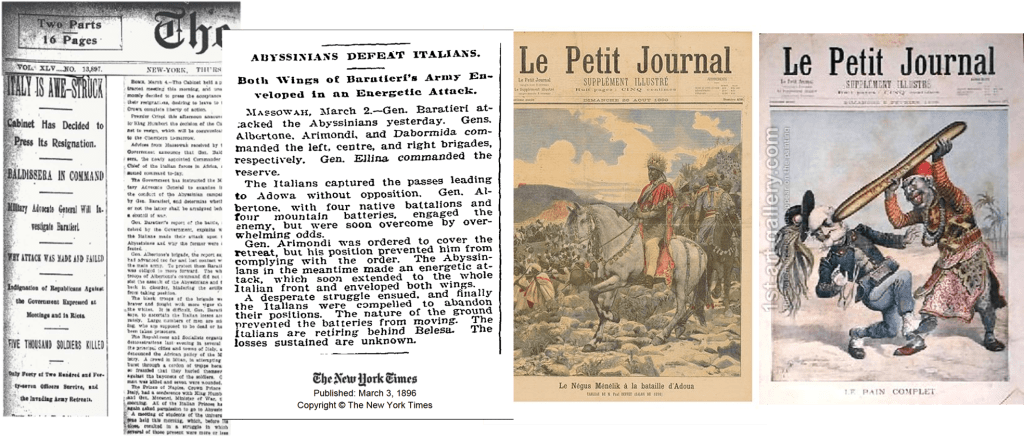
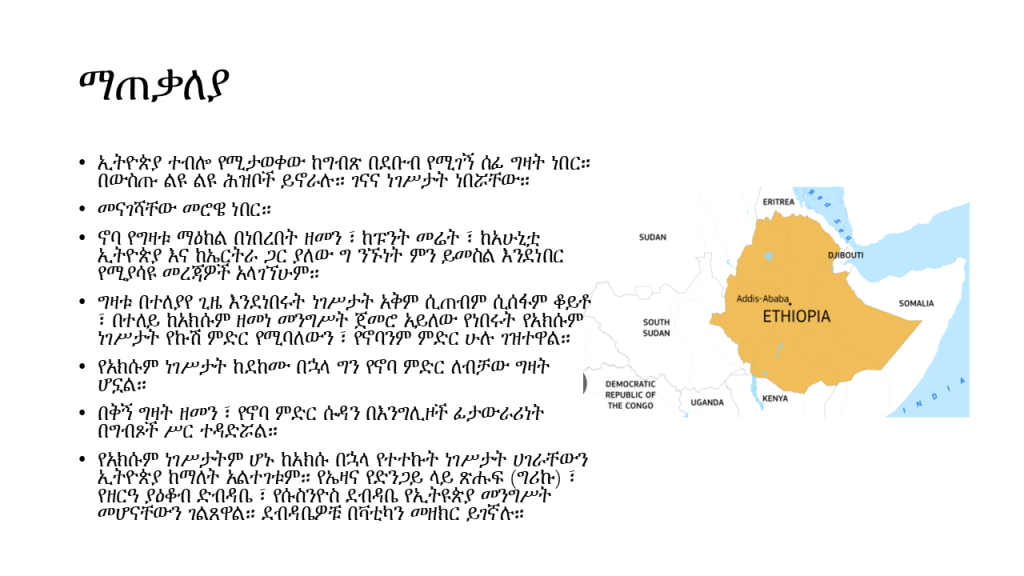
A brief recount of the Ethiopian history and the victory of Adowa – presented to the Ethiopian community in Trondheim during the celebration of the 128th and 129th Adowa victory

The following slides were presented at the celebration of the 128th Adowa Victory. The slides introduce the history of Ethiopia from ancient times to modern times. The slides recount the circumstances that led to the Adowa battle. They highlight the victory of the gallant Ethiopian forces at the battle.

Consciousness-1

This topic requires a cautious and thoughtful approach. In recent times, many scientists seem eager to explore this subject, approaching it through scientific methods. This is an impossibility as the scientific methods themselves are contained in consciousness. Thought too is contained in consciousness. What is contained cannot fully describe what contains it.

When you hear scientists say so and so is consciousness, take an important step. Replace the subject with “a part in consciousness.” Understand it as “A part in consciousness says so and so is consciousness.”

Some ask whether consciousness is an illusion or even say that it is illusion. We ask then to whom is consciousness an illusion? If the answer is to consciousness then we ask how does itself appear for itself as illusion? Saying consciousness is an illusion leads to contradiction. Anything else can be if there is anything else apart from consciousness but consciousness cannot be an illusion.

Some say one can upload one’s consciousness into a computer. That cannot be. There is consciousness but not yours to upload or download. To do that you have to step outside of it. But you have no other ground than consciousness. Ask your self who is calling consciousness mine. None other than consciousness itself. For it alone is and only consciousness can say mine. You can upload your thought but your thought is not consciousness but of consciousness.

The party that is portrayed as the subject is a part of what is portrayed as the object- i.e. consciousness. The subject is not independent of the object of investigation and vice versa. In fact, consciousness is playing the role of both the subject and the object. The investigation cannot result in an objective truth. Consciousness is undefinable. There is nothing outside itself to define it. Defining is an act in consciousness, and the definition is contained in consciousness. You cannot step outside of consciousness to define it. You cannot limit it. You are part of it and can only be aware of it. In fact it is consciousness that is aware of itself. The approach to consciousness has to be through negation; i.e., finding out what it is not rather than what it is.

10.12.2024

Last updated 04.01.2025

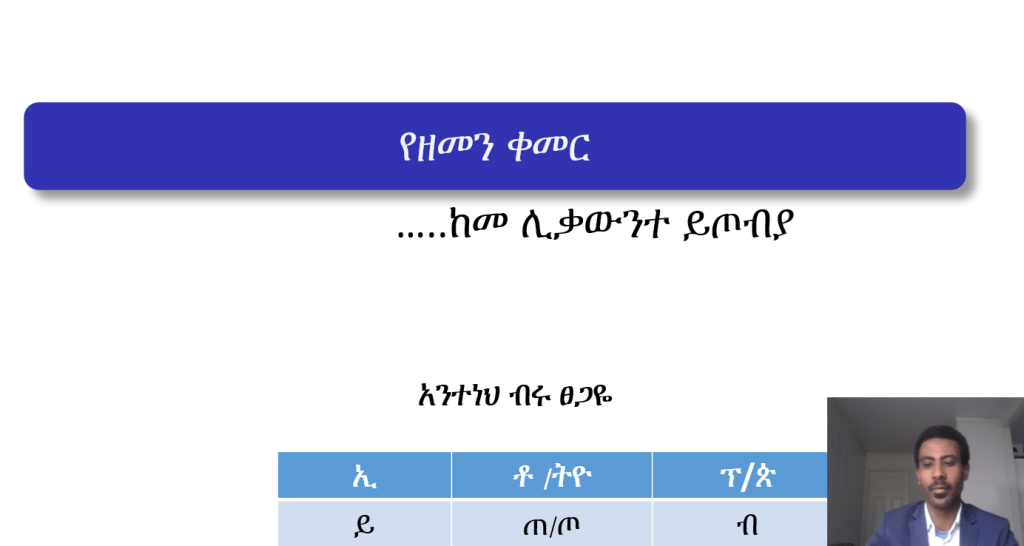
የኢትዮጵያዊያን የዘመን አቆጣጠር

መልካም አዲስ ዓመት ይሁንልን። በሚከተለው የፓወር ፖይንት ሰነድ ፣ እንደ ኢትዮጵያዊያን አቆጣጣር በ2016 ያቀረብኩትን ይዘት አካፍላለሁ።

IMED hosted Book Launch Event At ILU, NTNU

This report is contributed by Dr. Solomon Abedom and Dr.Mulugeta Bereded and originally reported at https://sway.cloud.microsoft/J7b6ATKn5YFPlADH?ref=Link&loc=endofstory

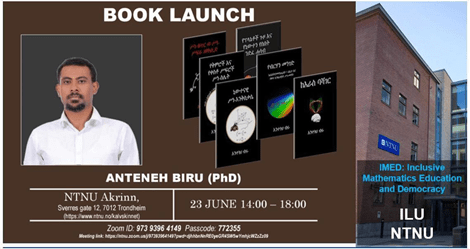
The research group Inclusive Mathematics Education and Democracy (IMED) at the Department of Teacher Education (ILU), together with the Ethiopian community in Trøndelag, hosted a book launch event at the Kalvskinnet campus, NTNU Akrinn, on June 23, 2024.

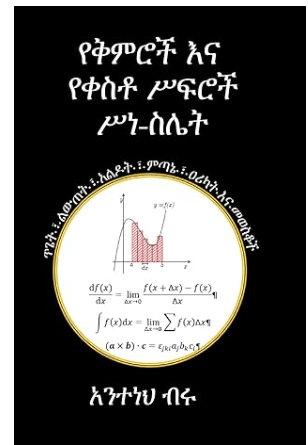
Dr. Antenh Biru, a Senior Geotechnical Engineer at the Norwegian  Geotechnical Institute (NGI) and a graduate of the Department of Civil  and Environmental Engineering at NTNU, has authored six books in the  Amharic language, a language that is widely spoken and used at the  medium of instruction at primary and junior schools in Ethiopia. The  titles of his books are: “ሥነ ቁጥር ወ ሥነ-ሥፍራ ዘዩክሊድ” (on Numbers and  Euclidean Geometry); “የቅምሮች እና የቀስቶ ሥፍሮች ሥነ-ስሌት” (on Calculus of scalar  and vector-valued functions); “ኒውተናዊ ሥነ-እንቅስቃሴ” (on Newtonian motion);  “የፕላኔቶች ጉዞ እና የኒውተን የስበት ንድፈ ሐሳብ” (on Planetary motion and Newton’s  theory of gravity); “የብርሃን መንገድ” (on Electromagnetism, Vision, and the  Special theory of relativity with emphasis on the latter); and “ከእራስ  ባሻገር” (Beyond Self). An overview of Anteneh’s books, in Amharic can be  found at the following link: https://antenehbiru.com/2024/05/26/book-launch/.

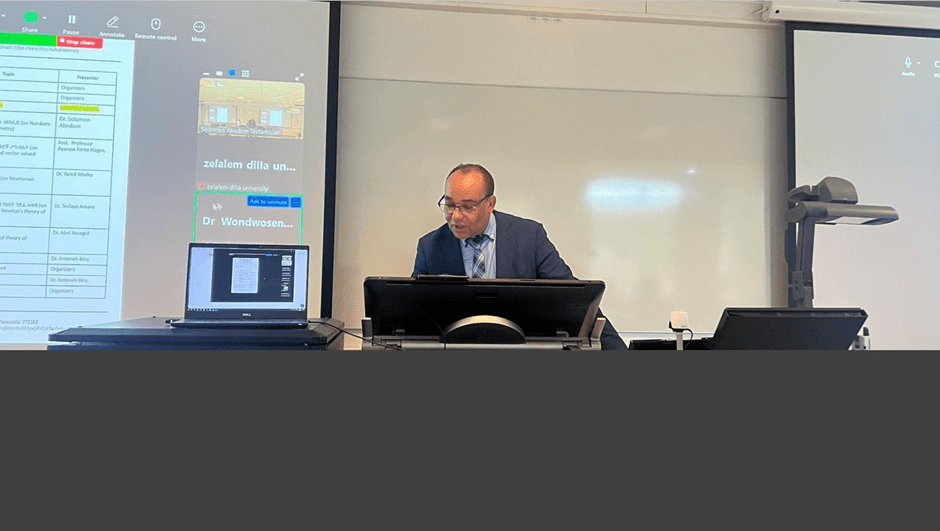
The first five books were reviewed and presented by five scholars: Dr. Solomon Abedom Tesfamicael, an associate professor at ILU, NTNU, Ayanaw Fente Hagos an Assistant Professor in Mathematics at Motlow State Community College, USA and founder of Utopia Maths Academy; Dr. Yared Worku, a research scientist at SINTEF, Dr. Tesfaye Amare, a research scientist at SINTEF and Dr. Abel Assegid, Senior Research and Development Engineer at Siemens Energy. The event was attended by more than 40 people in person, who are mainly from the Ethiopian community residing in Trondheim, and 32 participants online via Zoom meetings from different universities in Ethiopia, Norway, and the USA. The book launch event was chaired by Dr. Mulugeta Bereded Zelelew, a senior hydrologist and water resources engineer at Multiconsult Norway.

Dr. Mulugeta expressed his deep appreciation for the work of Dr. Anteneh as follows: Dr. Anteneh has a keen interest in a variety of subjects, including language, history, physics, mathematics, and philosophy. He has dedicated a significant amount of time to writing these books.

The Ethiopian education system is greatly dependent on foreign languages, which creates an obvious barrier to understanding the essential principles, practical application, and the process of knowledge transfer in subjects like mathematics, physics, and philosophy. I hold a strong conviction that accessing the fundamental principles of mathematics, physics, philosophy, and other subjects in one’s own native language cultivates a deeper understanding of these disciplines. This will enable students, educators, and others to express themselves authentically, thereby fostering a sturdy educational foundation. Moreover, it enhances communication and comprehension among scholars and empowers individuals to grasp complex concepts, think critically, and engage in meaningful dialogues on these subjects. The publication of these six books signifies not only a remarkable milestone in Dr. Anteneh’s achievements but also stands as a notable and exemplary contribution to enriching students, educators, scholars, and others. This, I believe, is a rare occasion that warrants celebration and recognition.

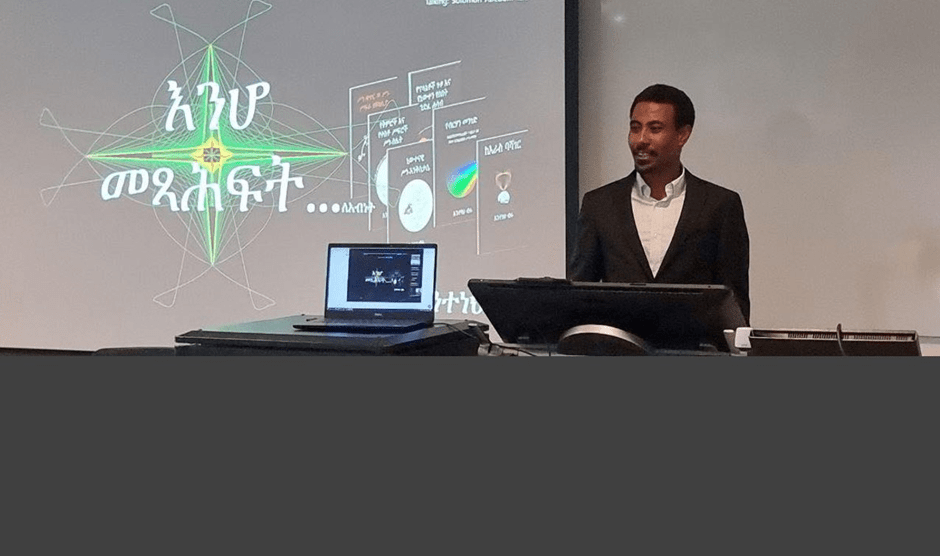
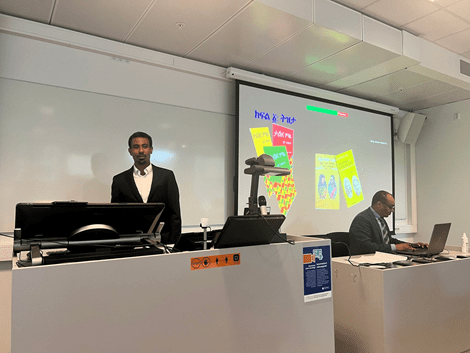
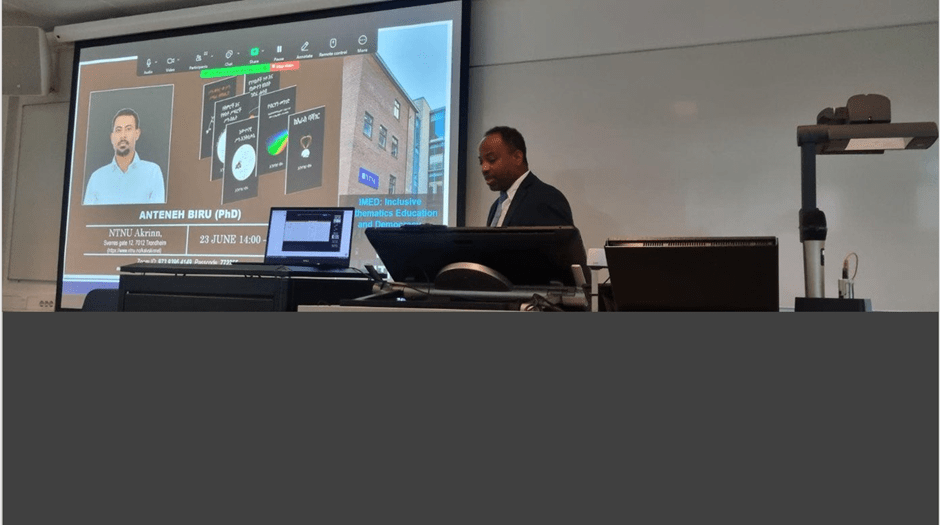
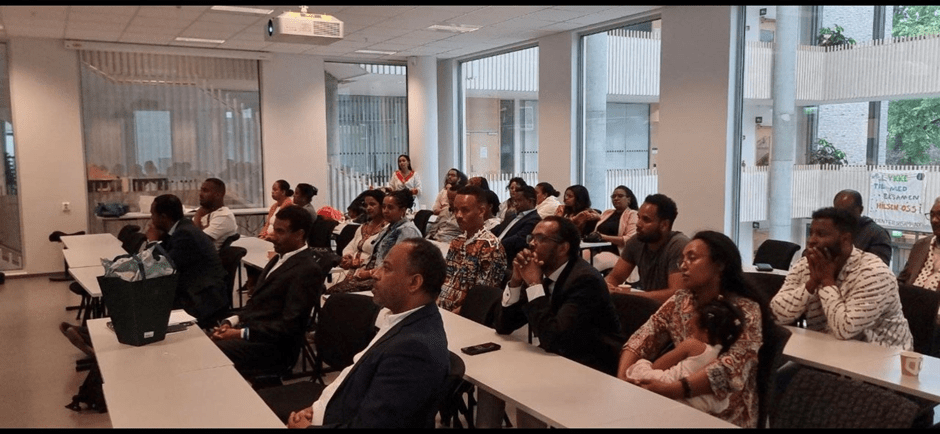
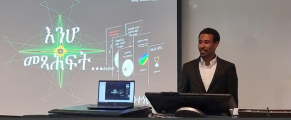
1 – Dr. Anteneh presents a summary of his work, while Dr. Mulugeta moderates the event.

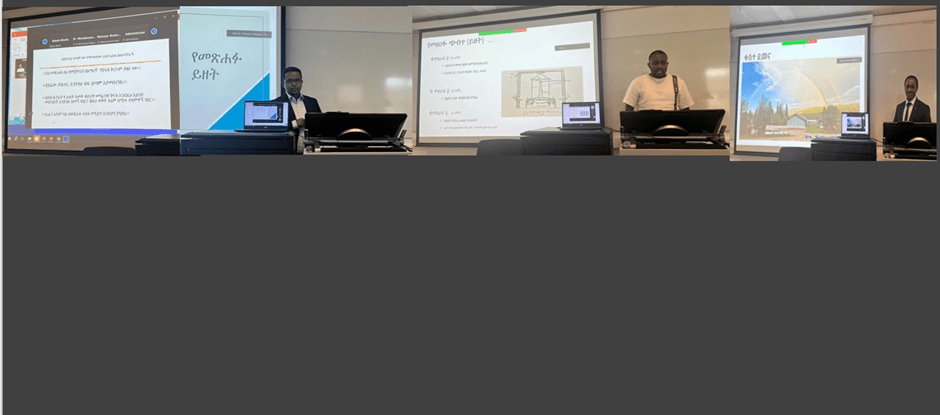
Dr. Solomon Abedom Tesfamicael, a member of the research group at IMED,  ILU, presented his review of the book: “ሥነ ቁጥር ወ ሥነ ሥፍራ ዘዩክሊድ” (on  Numbers and Euclidean Geometry), emphasizing the importance of such pioneering work in translating and presenting mathematical concepts and procedures, including some of the original works of Euclid’s book, in the Amharic language.

Dr. Solomon used the four perspectives that Barwell, R.  (2014) used to describe  Mathematics and language: The linguistic perspective, the Discursive perspective on mathematical cognition, the  Socio-Political Perspective,  and the Discourse of mathematics education research.  From a linguistic perspective, Dr. Anteneh’s work presents the narrative style of written mathematics (in broad STEM fields) in the context of  Amharic-speaking communities in a way that the text is related to the intended audience (Pimm & Sinclair, 2009). From a discursive perspective in mathematical cognition, providing learners with mathematical concepts in their own language offers the opportunity for children’s cognitive development, as Vygotsky’s theory asserts that language mediates between the individual and society.  According to Sfrad A. (2001) and commognitive theory, “learning is  grounded in the assumption that thinking can be usefully conceptualized  as one’s communication with oneself.” Being able to engage in mathematical thinking in a mother tongue, in this case in the Amharic language, can help millions of children gain deeper knowledge and understanding of facts and further develop critical thinking and problem-solving abilities in a demanding world.  From these vantage points, Dr. Anteneh has contributed extraordinary work for students,  teachers, educators, and other stakeholders who have a deeper interest in engaging in doing mathematics.

The other four presenters were Assistant Professor Ayanaw, who reviewed the book “የቅምሮች እና የቀስቶ ሥፍሮች ሥነ-ስሌት” (on Calculus of scalar and vector-valued functions). Dr. Yared Worku reviewed the book “ኒውተናዊ ሥነ-እንቅስቃሴ” (on Newtonian motion). The fourth book, “የፕላኔቶች ጉዞ እና የኒውተን የስበት ንድፈ ሐሳብ”   (on Planetary motion and Newton’s theory of gravity), was reviewed by   Dr. Tesfaye  Amare.  The last book, “የብርሃን መንገድ”   (on Electromagnetism, Vision, and the  Special theory of relativity with emphasis on the latter), was reviewed by Dr. Abel Assegid.

Assistant Professor Ayanaw mentioned that Dr. Anteneh’s work is a remarkable achievement. He emphasized that presenting the fundamental principles of mathematics in the Amharic language with such depth had never been done before.  In addition, he added the following comments: “Thanks so much for allowing me to review this highly advanced mathematics book in Amharic. I have always wished for such a book for our country. This is a great start and initiative that I hope everyone will learn from, inspiring them to start writing in their own fields.  One recommendation for Dr. Anteneh: In the future, instead of writing from scratch using multiple resources, I highly recommend selecting the most popular reference math or physics book and translating it into  Amharic to reach more readers with less effort and resources. Also, if he could form a team of experts at his level, they could collaboratively produce more books together.  I look forward to working with your team and Dr Anteneh.”

Amazed by the work, Dr. Yared mentioned his challenges in understanding the fundamental principles of mathematics and physics during his undergraduate studies in Ethiopia, and Dr.  Anteneh’s work is one of the works that will help many to understand the fundamental principles of mathematics and physics in the native language of Amharic. Dr. Tesfaye highlighted that the fundamental principles of planetary motion and Newton’s theory of gravity are deeply analyzed and presented in the book. He also commented that symbols and nomenclatures used in the book are synchronized with well-accepted symbols and nomenclatures within the subject. This makes it easier to follow the detailed descriptions in the book and cross-reference the topics in books written in other languages. Dr. Abel said the book explains the fundamental principles of Electromagnetism, Vision, and the  Special theory of relativity in detail in the Amharic language, which had never been done before. He also commented that adding a glossary of nomenclatures and symbols used in the book helps to understand the contents of the book.

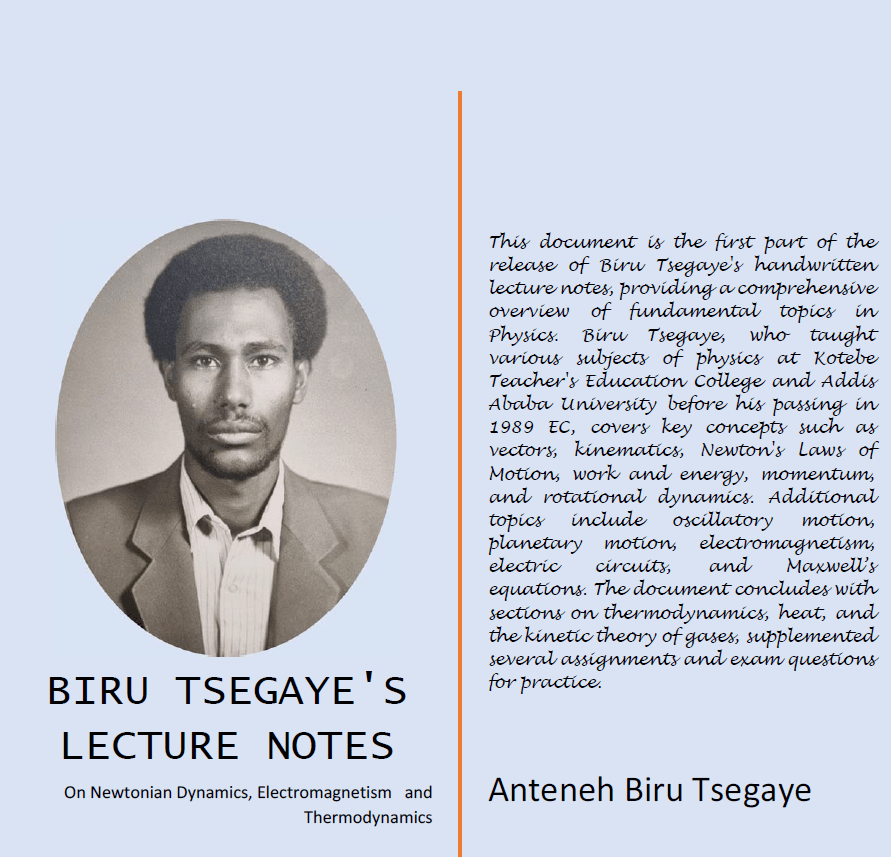
In addition, other than his recent books, Dr. Anteneh Biru authored diversified books and articles (https://antenehbiru.com/). Dr. Anteneh also published his late father’s novel MSc thesis titled “Path Integrals in Quantum and Statistical Mechanics” in 2011. His father, Biru Tsegaye, completed his Master’s Degree from Addis Ababa University and later became a lecturer at AAU.  Biru was admitted to Cincinnati University for a PhD, but suddenly felt ill and sadly passed away in 1997 at the young age of 31, while in preparation to travel to the US. This and his other distinguished contributions in Geotechnical Engineering were presented by Dr. Samson  Abate at the closing of the book launch venue.

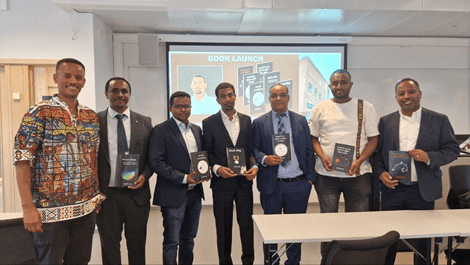
2 – Dr. Anteneh with book reviewers and program moderator.

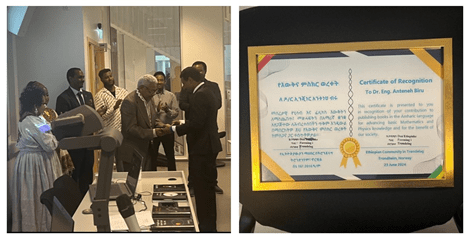
The  Ethiopian community in Trøndelag presented a flower and a certificate to Dr. Anteneh Biru in recognition of his extraordinary efforts to provide learning opportunities in mathematics and physics for students,  as well as for his active engagement with children in Trondheim.

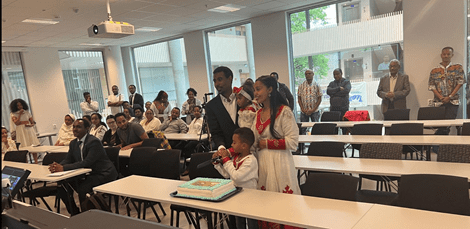
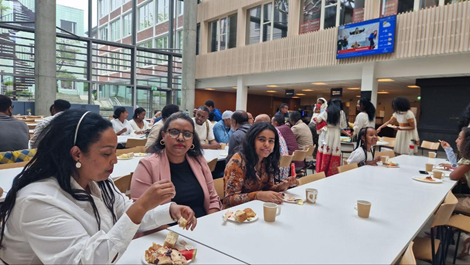
3 – Dr. Anteneh and his family cut the cake to celebrate the event. 
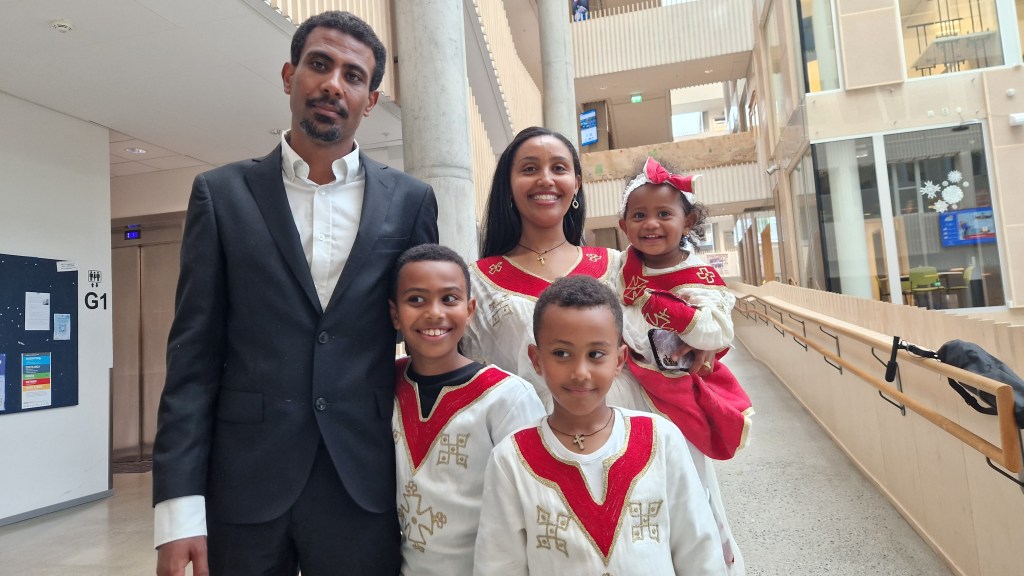
4 – Dr. Anteneh and his family
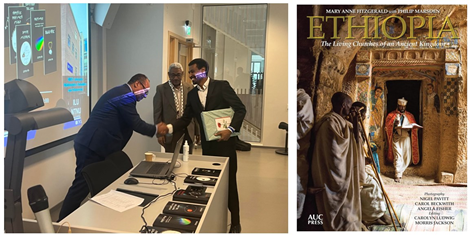
5 – Dr. Anteneh also received the book “Ethiopia –  The  Living Churches of an Ancient Kingdom” as a gift from his friends  in  appreciation of his remarkable contributions”

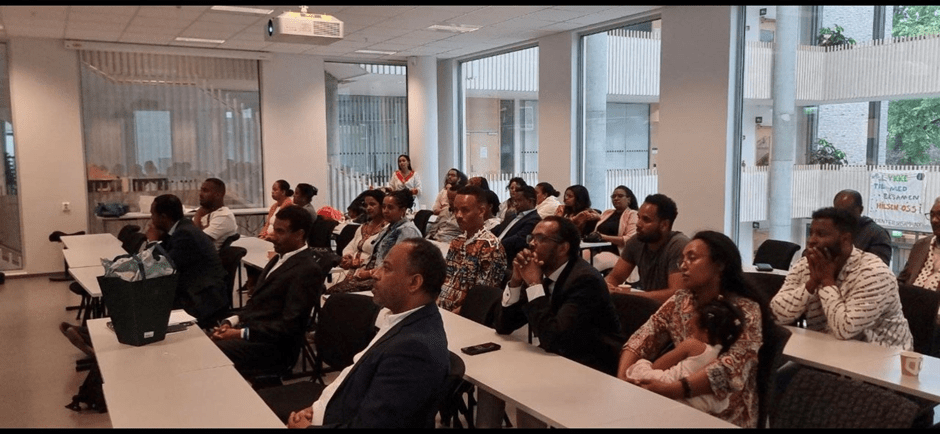
Participants of the Book Launch event.

Wisdom and Smartness

Kebede Michael formulated a story about three individuals with extraordinary knowledge. They set out to demonstrate their abilities to the king of the land. Along the way, they were joined by a commoner. During their journey, they encountered the scattered skeleton of a long-dead lion in a jungle. One of the knowledgeable individuals claimed he could reassemble the bones and, with a few muttered words, he did just that, fitting the skeleton pieces together perfectly. The second person asserted he could restore the body, and he succeeded, making the lion look like a fresh corpse. The third individual boasted he could bring the lion back to life.

The commoner, seeing where this was headed, protested. He said, “You three are very smart, but I am not. I am afraid the lion you are about to wake up will eat us all. I beg you not to proceed.” Despite his fears, the third man insisted, belittling the commoner. They mocked him, saying, “You think the lion we brought to life would harm us, you fool.” Realizing they would not be deterred, the commoner asked for one last favor: time to find a safe place. They agreed, and he climbed a nearby tree.

The third man muttered a few words and brought the lion back to life. Fully awake, hungry, and angry, the lion immediately leaped upon the person who revived him and devoured him. Terrified, the other two were frozen with fear. The lion then attacked the second man who had restored its body, killing and eating him as well. Satiated, the lion sought to secure more food for later. He killed the third man who had reassembled his skeleton and took him to his lair.

Watching from the tree, the commoner muttered, “A knife that is ultra sharp cuts through the sheath; ultra smartness can lead to death.”

You see…

Wise (ጠቢብ) and smart (ብልኅ) are entirely different. Wise sees wholly; smart divides, fragments and manipulates. The foundation of wisdom is love (ፍቅር); the foundation of smartness is the intellect. Smart continues to dissect even where the dissection can have dangerous consequences. Wisdom can use the intellect but can abandon it when it sees it as destructive. Wisdom sees a greater good; intellect sees a greater use. Smartness (ብልኅነት) can be ego-driven (ጠባያዊ); wisdom (ጥበብ) cannot. Wisdom is at ease; smartness requires effort. In these days, smartness is acclaimed, wisdom is not. Wise can see and understand smart, smart cannot fully grasp wisdom.

Book launch

I grew up in the countryside until the age of 13 and, for the most part, had a fortunate childhood. I was blessed with a grandmother who nurtured me with an abundance of love, and I was surrounded by genuinely caring relatives and neighbors. My memories are filled with beautiful landscapes, shepherds, cattle, farmers’ activities, and children’s free play. These early, enchanting experiences may have given me a somewhat idyllic view of life.

I was a curious child who easily engaged with the elderly, asking questions and listening intently, my imagination fully immersed in their stories—and they took me seriously. Once I learned to read, I eagerly devoured Kebede Michael’s “Tarik ena Misale” and Tekletsadik Mekuria’s history books, driven by intrinsic motivation. I could recite most of Kebede Michael’s poems, which resemble Aesop’s fables in their moral depth. I loved the way he crafted short stories and the profound messages they conveyed, and I still read them today.

I often sat by one of the elders—my grandmother’s uncle, Kebebew Wagaye (he was often called by the shorter version Kbu Wagaye)—who could recount the history of Ethiopia from memory. Despite having no formal education, he was a fascinating man, wise and endowed with a formidable memory. His stories captivated me and deepened my appreciation for our rich heritage.

As I matured, I developed a deep interest in history, physics, mathematics, and philosophy, enjoying reading and reflecting on various topics in these fields. That my father was a physicist might have inspired my interest in physics – I didn’t grow up with him, but I might have subconsciously felt closer to him by pursuing physics.  

About nine years ago, several incidents inspired me to start writing about the special theory of relativity in Amharic. I have also been long fascinated by the nature of language, thought, epistemology, and related aspects of human nature. The works I began then and continued whenever possible have now come to fruition. At the end of last year, I published my first book, intentionally limited to 40 pages, titled “Beyond Self” (ከእራስ ባሻገር). This book explores the concepts of self, thought, and related aspects of human nature—a project I informally called “a thesis at 40 years of age” (although it came a bit latter than originally intended) and an initiative I hope others will undertake. You may call it “Thesis -40”

A couple of months later, I published much of the work I produced intermittently over the last 9 years in five more books: “ሥነ ቁጥር ወ ሥነ ሥፍራ ዘዩክሊድ” on Numbers and Euclidean Geometry, “የቅምሮች እና የቀስቶ ሥፍሮች ሥነ-ስሌት” On the Calculus of Scalar and Vector-valued Functions, “ኒውተናዊ ሥነ እንቅስቃሴ” on Newtonian motion, “የፕላኔቶች ጉዞ እና የኒውተን የስበት ንድፈ ሐሳብ” On Planetary motion and Newton’s theory of gravity, and “የብርሃን መንገድ” on Electromagnetism, Vision, and the Special Theory of Relativity, with an emphasis on the latter. Below are the links to these books:

https://www.amazon.com/s?i=stripbooks&rh=p_27%3AAnteneh+Biru+Tsegaye&s=relevancerank&text=Anteneh+Biru+Tsegaye&ref=dp_byline_sr_book_1

These books are released with the hope of inspiring the Ethiopian youth to engage in scientific investigation in their own language and encouraging scholars to write their research findings and scientific discourses in Amharic which will make them relevant to society.

Initially, I intended to publish everything in a single book, but I found it challenging to maintain a smooth flow and come up with a fitting, descriptive title. So, I decided to split the content into multiple books. However, these books are interdependent. Words defined in the first book are used freely in the subsequent books without redefinition. This might inconvenience readers who pick up one book randomly without reading the others. Future editions will include a glossary of important words and terms, allowing readers to choose any book independently. For now, I recommend starting with “ሥነ ቁጥር ወ ሥነ-ሥፍራ ዘዩክሊድ,” where several important terms in mathematics are formally defined.

My primary goal is not commercial. This is a modest attempt to engage the Ethiopian youth and scholars from various disciplines in this cause. The goal is the initiation of hearts into the cause. I envision scholars holding meaningful dialogues about scientific and technological affairs in their native language, students and educators in higher education using supplementary references in Amharic, and the establishment of scientific journals that communicate in Amharic. The books should be read with this purpose in mind.

I acknowledge the challenges readers may encounter. There will be new words, borrowed from Geez or adapted from the Amharic vocabulary, that might initially be unfamiliar. Despite my best efforts, there may be typographical errors that may disrupt the reading flow – I have found a few myself. However, I hope the dedicated reader will persevere, adjust, and continue. Remember, every word was once unfamiliar – just a sound – until we learned its meaning or defined one for it. This is a natural process. By the end of the reading, I trust the engaged reader will master the content and consider ways to enhance it, contributing to the initiative so that the Amharic language is enriched with the necessary vocabulary for modern science and technology.

Remember: The ultimate goal isn’t the books I’ve written, but you, the reader, inspired to write works that are meaningful to society. You are the one who will pen new discoveries in your own language.

OBS! Please find the brief overview of the books and some notes in Amharic in the following pdf file.

<object class="wp-block-file__embed" data="https://antenehbiru.com/wp-content/uploads/2024/05/e18ba8e18898e18cbde18893e18d8d-e1889be188b5e18898e188a8e18982e18bab1.pdf&quot; type="application/pdf" style="width:100%;height:600px" aria-label="<mark style="background-color:rgba(0, 0, 0, 0);color:#eab61a" class="has-inline-color"><strong>የመጻሕፍት እና የመጣጥፎች የይዘት ሰነድ</strong>የመጻሕፍት እና የመጣጥፎች የይዘት ሰነድDownload

ሜታ ፊዚክስ… መግቢያ

በቅርቡ አንድ ተናጋሪ ስለ ሜታ ፊዚክስ እና ተያያዥ የሆኑ አጉራ ዘለል ልፈፋዎችን ሲያደርጉ ዐየሁ። የተለያዩ የዘመናዊ ፊዚካ ቃላት በየቦታው ጣል ጣል ይደረጋሉ። አልፎ አልፎ ሃይማኖታዊ ቃላት ይወረወራሉ ፣ ጥቅሶች ይጠቀሳሉ። እንዲህ ዐይነት አጉራ ዘለል ልፈፋዎች ሲበዙ ፣ በወቅቱ ማብረሻ ካልተበጀላቸው ማኅበረሰባዊ ውዥንብር ይፈጥራሉ። እንደዚህ ዐይነት ነገሮችንም አለምርመራ ለማኅበረሰቡ ማቅረብ ኃላፊነት የጎደለው ነው ብየ አስባለሁ።

ሜታ ፊዚክስ

የቀዳሚ መርሖችን ጉዳይ እና ሐሳባዊ የሆኑ ዕይታዎችን ፣ ስለ መሆን ፣ ማንነት ፣ ዕውቀት ፣ ጊዜ እና ቦታ ስለመሳሰሉ ይዘቶች የሚያትት የፍልስፍና ቅርንጫፍ ነው።

የዚህ ፍልስፍና ቀዳሚ ሐተታ በአሪስጣጣሊስ የተደረሰ ነው። ስሙን ያወጣው ግን አሪስጣጣሊስ ሳይሆን የአሪስጣጣሊስን ሥራዎች በአንደኛው መቶ ክፍለ ዘመን ቅልክ ስብስቦ የጠረዛቸው አንድሮኒከስ (Andronicus of Rhodes) የሚባል ሰው ነው። በጽርእ ቋንቋ ሜታ ማለት በኋላ ፣ ተከትሎ ማለት ነው። ስለዚህ የሜታ ፊዚክስ ቀጥተኛ ትርጉም ከፊዚካ በኋላ የሚል ነው። የአሪስጣጣሊስ ሥራዎች (ከሦስት ሺህ ገጽ በላይ ያለው) በድረገጽ ይገኛል። የተወሰኑትን ክፍሎች ቀደም ብየ ለማጥናት ዕድሉ የነበረኝ ቢሆንም ይኸን ክፍል በደመምሳው እንጅ አድምቸ አላነበብኩትም ነበር። ነገር ግን ከቅርብ ጊዜ ወዲህ በሜታ ፊዚክስ ሥም በሀገራችን የሚደረጉ ዲስኩሮችን ስመለከት ጥቂት ነገር ለማለት ስለፈለግሁ ይዘቱን የተወሰነ ገረፍ ገረፍ አደረገሁት። ከዛሬ 2400 ዓመት በፊት የተደረሰ ፍልስፍናዊ ድርሰት ቢሆንም ቅሉ ብዙ በሳል እና ጥልቀት ያላቸው ፍልስፍናዊ ሐሳቦችን የያዘ ነው።

በግሪክ ቋንቋ ሶፊያ ማለት በእንግሊዘኛው wisdom በአማርኛ ምናልባት ጥበብ ሊሆን ይችላል። ፊሎ ማለት ደግሞ ፍቅር ማለት ነው። ስለዚህ ፊሎሶፊ (ፍልስፍና) የጥበብ ፍቅር ፣ አፍቅሮተ ጥበብ ተብሎ ሊተረጎም ይችል ይሆናል። አሪስጣጣሊስ ሶፊያ ቀዳሚ ምክንያቶችን (anitia) ወይም  መርሖችን የሚመለከት የዕውቀት ዘርፍ ነው ይላል። ሜታ ፊዚክስም የሚያተኩረው እነዚህ ቀዳሚ (መሠረታዊ) ምክንያቶች ወይም መርሖች ላይ ለመድረስ የሚደረግ ሐተታ ላይ ነው። ይኸን የፍልስፍና ዘርፍ  መሠረታዊነቱ ከሌሎች የፍልስፍና ዘርፎች ሁሉ የላቀ መሆኑን ለማመልከት አሪስጣጣሊስ ቀዳሚ ፍልስፍና ይለዋል።

አሪስጣጣሊስ በዘርፎች (Categories) ሐተታው ላይ የመሆን ነገሮችን መድቧል ፣ ከነዚህም ውስጥ ይዘት (ሥሪት) ፣ መጠን ፣ ቅስም እና ዝምድና ይገኙበታል። የነገር ይዘት (ሥሪት) መሠረታዊ እንጅ ጥገኛ አይደለም። ሌሎች የመሆን ምድቦች ግን በነገሩ ይዘት (ሥሪት) ላይ በአንድም በሌላም መልክ ጥገኛ ናቸው ፣ ከይዘቱ (ሥሪቱ) ውጭ ሕልውና የላቸውም። ለምሳሌ ቀለም በአካላት ላይ ፣ ዕውቀትም በነፍስ ላይ ጥገኛ ናቸው ከነዚህ መሠረታዊ ይዘቶች (ሥሪቶች) ውጭ የየራሳቸው ሕልውና የላቸውም። ስለዚህም የትኛውም መሆን ሄዶ ሄዶ የሆነ ይዘት (ሥሪት) ላይ የሚደርስ እና ይዘቱን ዋቢ የሚያደርግ መሆን አለበት። የሜታ ፊዚክስ ሐተታ ይኸን መሠረታዊ የነገሮች የመሆን ማዕከል የሆነን ይዘትን (ሥሪትን) በመበየን ላይ የሚያጠነጥን ነው።

ነገሩ ሐሳባዊ እንጅ ተግባራዊ አይደለም። በሥነሞገት የሚወጠር ፣ የሚያከራክር የሚያወያይ ነው እንጅ መተግበሪያ አይደለም “በሜታ ፊሲክስ እንዲህ ማድረግ ይቻላል” የሚል ንግግር እውነት ሊሆን አይችልም። አሪስጣጣሊስ በሜታ ፊዚክስ የሚመለከተው ስለተፈጥሮ መሠረታዊ ባሕርይ እንጅ ከተፈጥሮ በላይ ስለሆነ ነገርም አይደለም።

የቅምሮች እና የቀስቶ ሥፍሮች ሥነ-ስሌት

እንሆ…

በዚህ መጽሐፍ የምንመለከተው በዋነኛነት የቅምሮች እና የቀስቶ ሥፍሮች ሥነስሌት ነው። መጽሓፉ ስምንት ምዕራፎች አሉት። በመጀመሪያው ምዕራፍ የሥነቅምርን ብያኔ ፣ ዐይነቶች እና ካርተሳዊ የቅንብር ሥርዓትን ይመለከታል። በሁለተኛው ምዕራፍ የቀስቶ ሥፍሮችን ብያኔ እና ሥነስሌት ይመለከታል። በሦስተኛው ምዕራፍ የዐሪካት ሥነስሌትን ይመለከታል። በዐራተኛው ምዕራፍ ለብዙ ሥሌቶች ጠቃሚ የሆኑ እና ዐሪካትን በምጥን ሒሳባዊ ሐረግ ለማስቀመጥ ምቹ የሆነው የመወስቅ ሥነስሌት ባጭሩ ቀርቧል። ምዕራፍ አምስት በከርቦች የተለያዩ ነጥቦች ላይ የሚሆኑ ተዳፋትን ፣ ተቃናትን ፣ ቅርበትን (ጥጌትን) ፣ ተቃረብን ፣ ከፊል እና ሙሉ ልውጠትን ለማስላት የሚጠቅሙ የስሌት ዘዴዎችን ይመለከታል። ምዕራፍ ስድስት የሬይማንን ድምር ፣ ሥነአልዶትን እና የአልዶት መተንተኛ መንገዶችን ባጭሩ ያቀርባል። ምዕራፍ ሰባት የቀስቶ መስኮችን ልውጠት እና አልዶት አተናተን እና በዚሁም ውስጥ ጠቃሚ የሆኑትን የግሪንን እና የጋውስን አዋጆች ያቀርባል። በመጨረሻው ምዕራፍ የከፍታ ፣ የዝቅታ እና የምጣኔ ስሌትን ባጭሩ ያቀርባል።

https://a.co/d/aOVRqz1

ሥነ-ቁጥር ወ ሥነ-ሥፍራ ዘዩክሊድ

እንሆ…

በዚህ መጽሐፍ የምንመለከተው በዋነኛነት ቁጥሮችን እና ዩክሊዳዊ ሥነ-ሥፍራን ነው። መጽሓፉ ሦስት ምዕራፎች አሉት። በመጀመሪያው ምዕራፍ ቁጥሮች እና መሠረታዊ ስሌቶች ቀርበዋል። በሁለተኛው ምዕራፍ የሥነ-ንጽጽር ድንጋጌዎች በቁንጽል ቀርበዋል። በሦስተኛው ምዕራፍ ዩክሊዳዊ ሥነ-ሥፍራ መሠረታዊ ብይኖች ፣ ድንጋጌዎች፣ አዋጆችን ከነማረጋገጫቸው ቀርበዋል። ዘዌዎች ፣ ተመሳሳይነት ፣ የፓይታጎረስ አዋጅ ፣ ክፍላተ ቅንብባት ከብዙ አዋጆች እና ማረጋገጫ ጋር ተመርጠው ቀርበዋል። የሥነ-ሥፍራ ድርሰቱ የተመረጠው ከጥንታዊው የግሪክ የሥነ-ሥፍራ ሊቃውንት ድርሰቶች በመሆኑ በዘመናዊ (ትንተናዊ ፣ ካርተሳዊ) ሥነ-ሥፍራ የተቃኘ አንባቢ ከመሠረታዊ ድንጋጌዎች ጀምሮ እያንዳንዱን አዋጅ በርጋታ ማየት ይኖርበታል።

መልካም ንባብ!

Amazon.com: ሥነ-ቁጥር ወ ሥነ-ሥፍራ ዘዩክሊድ (Amharic Edition): 9788269358308: Tsegaye, Anteneh Biru: Books

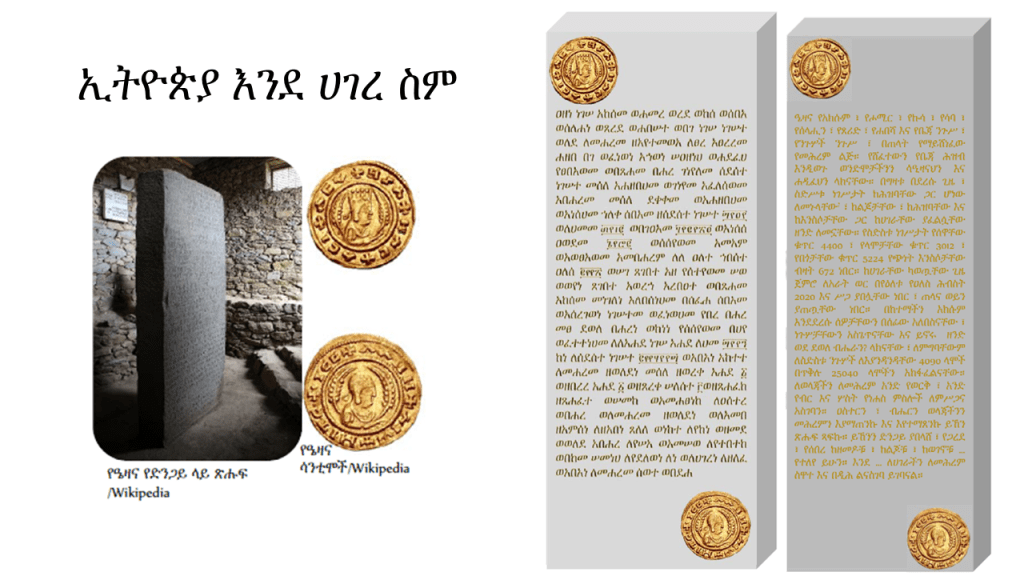
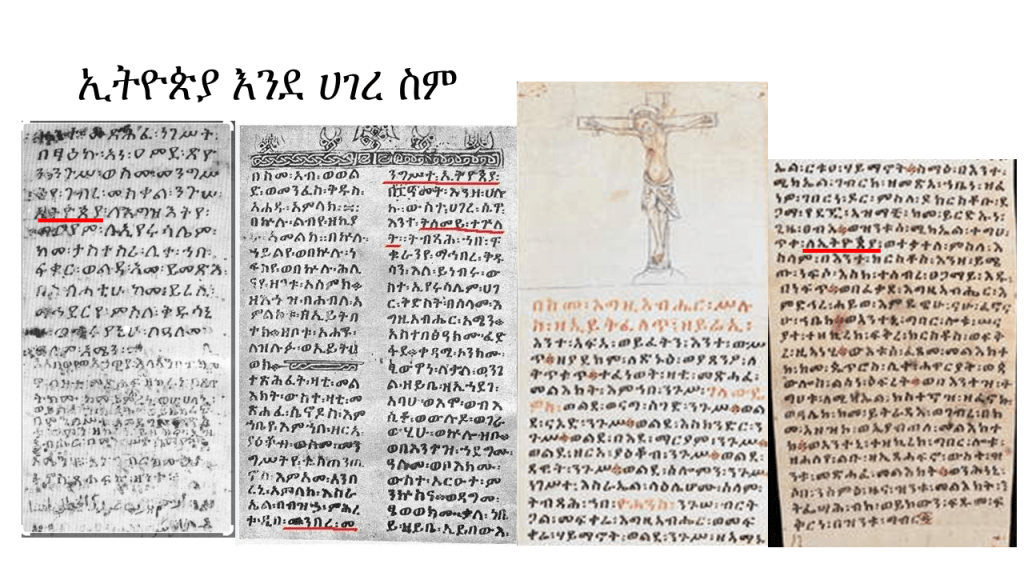
የዔዛና የድንጋይ ላይ ጽሑፍ (ግእዙ)

This note is concerned with the translation of the Geez part of Ezana’s stone transcription. The Ezana stone is a stone tablet that was transcribed during the time of Ezana commemorating Ezana’s military expeditions, victories and conquests. The transcriptions are in three languages; namely Geez, Sabean and Greek like the Rosetta stone.

https://zenodo.org/records/10069806

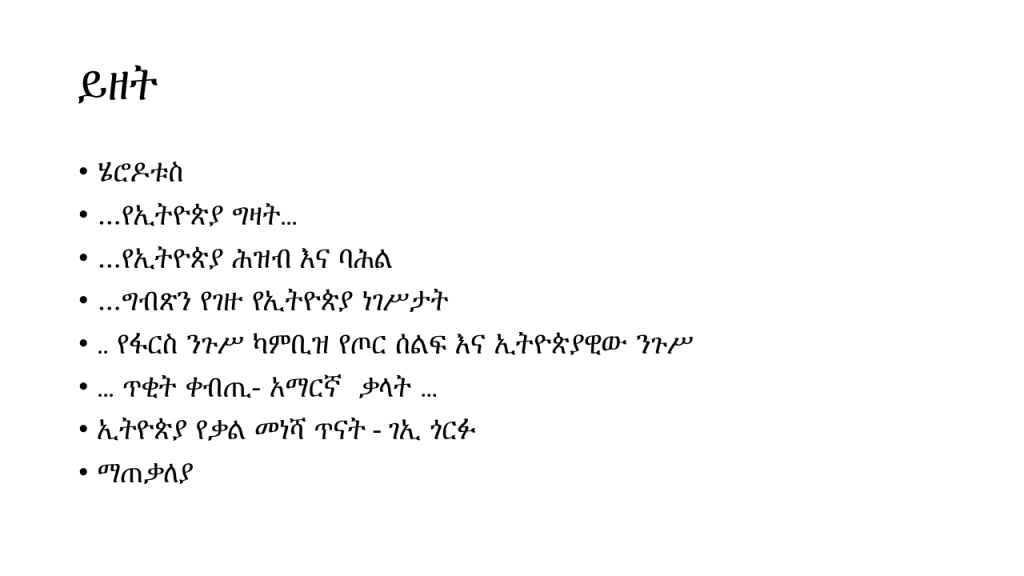
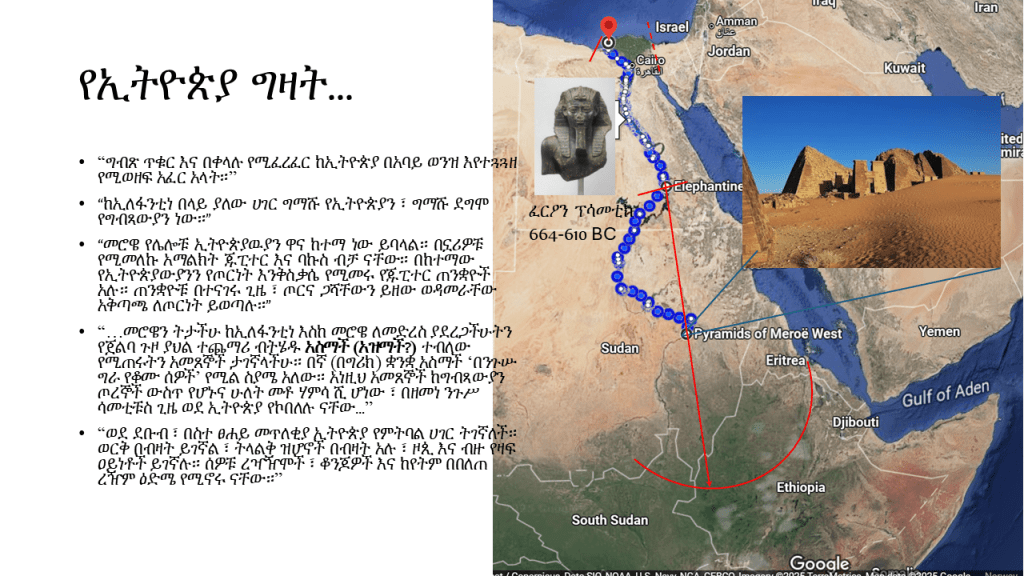
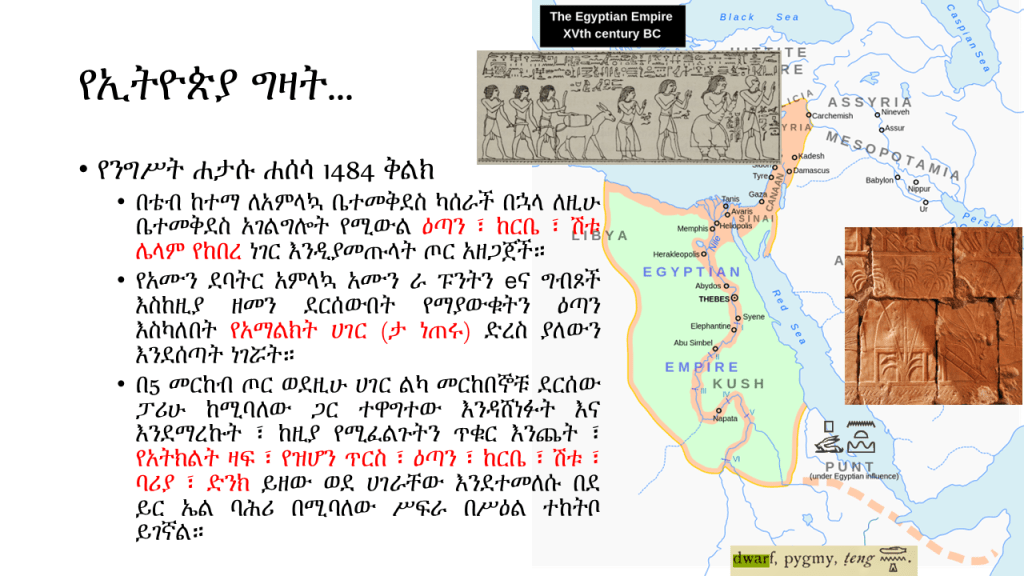
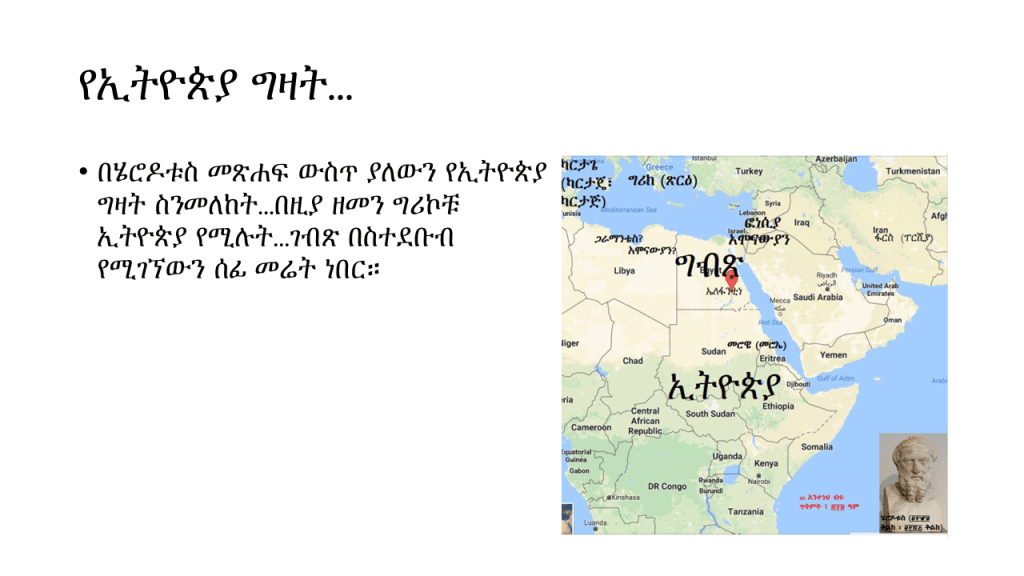
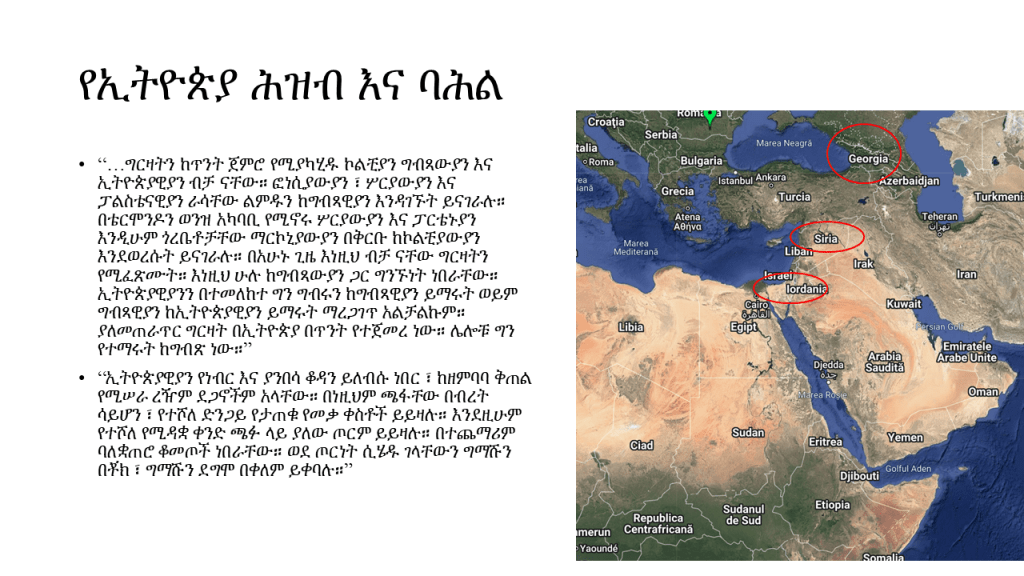
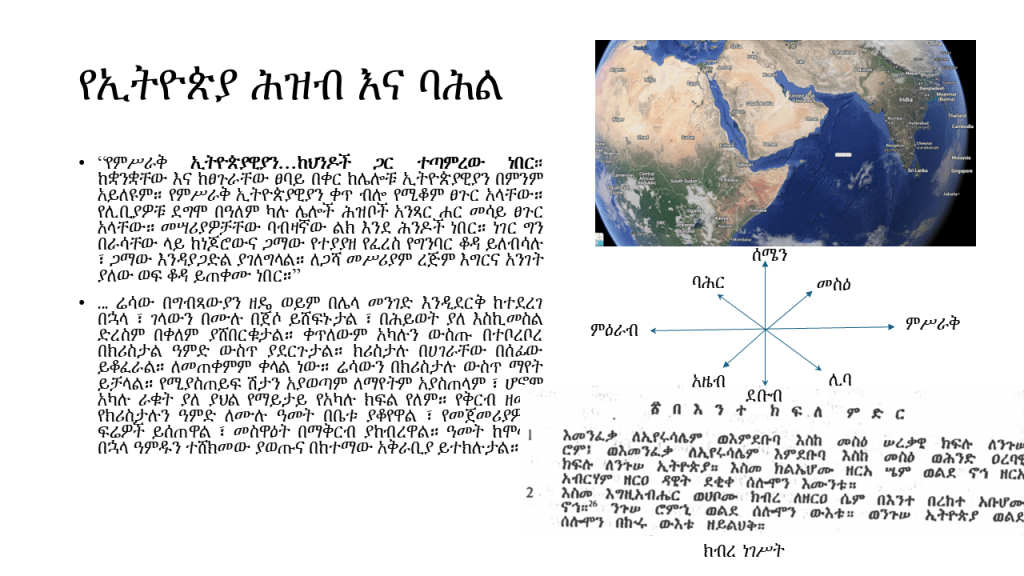
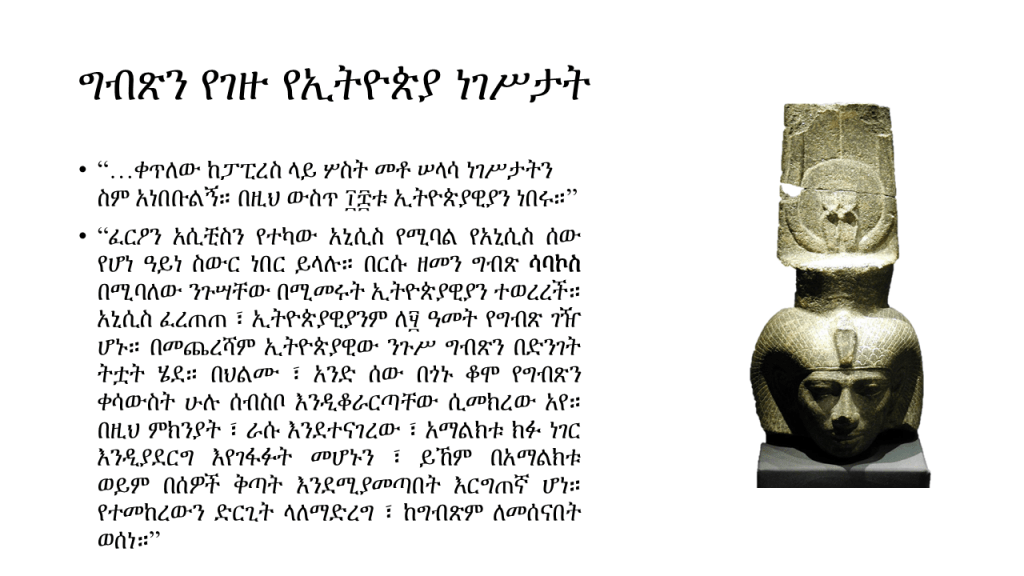
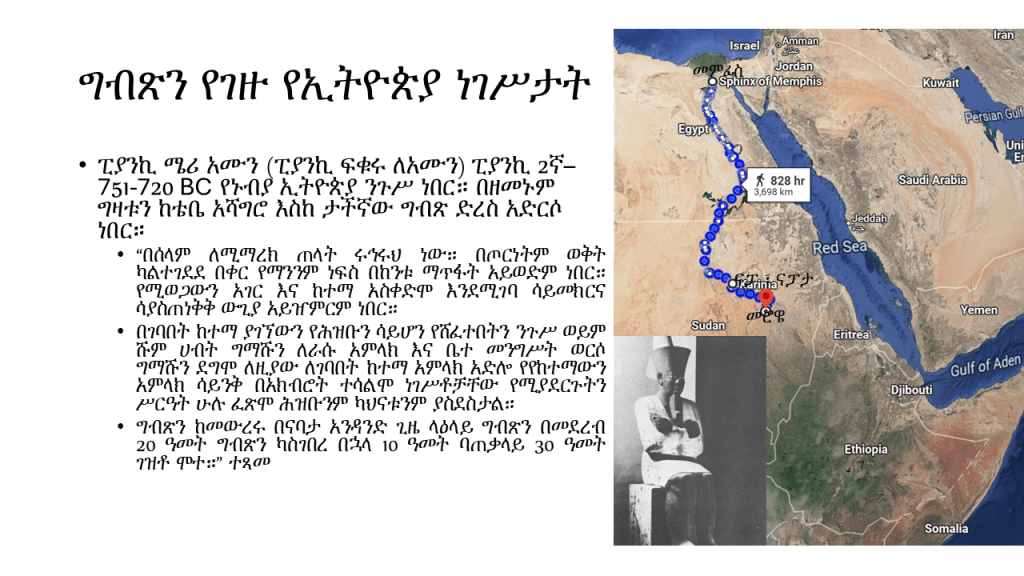
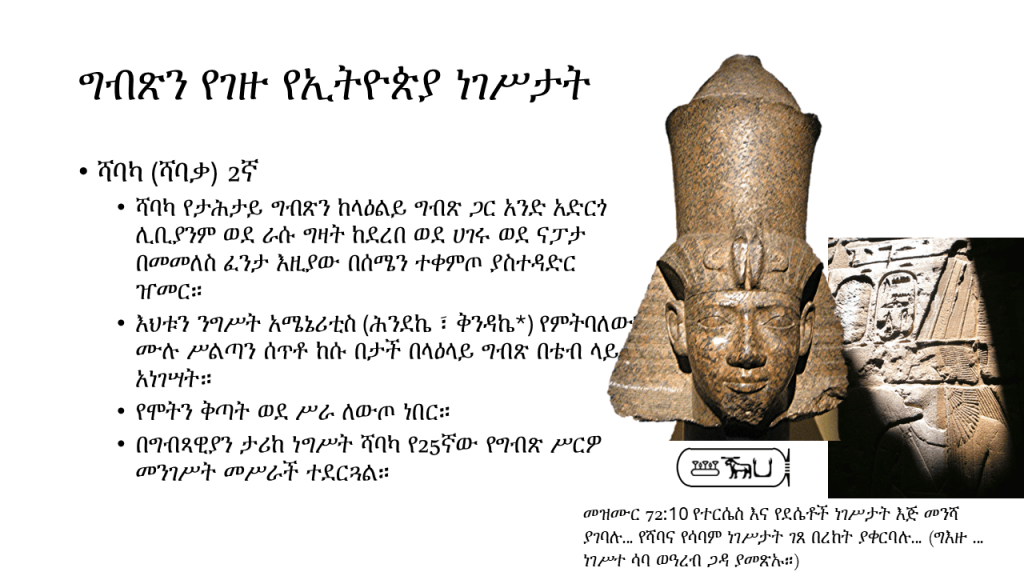
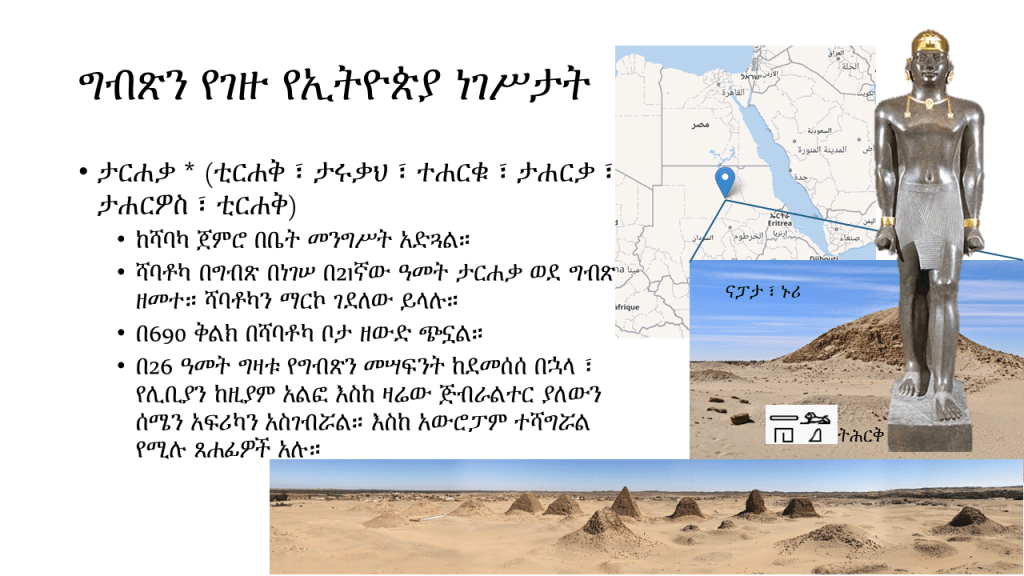
ኢትዮጵያውያን በሄሮዶቱስ የታሪክ መጽሐፍ ውስጥ

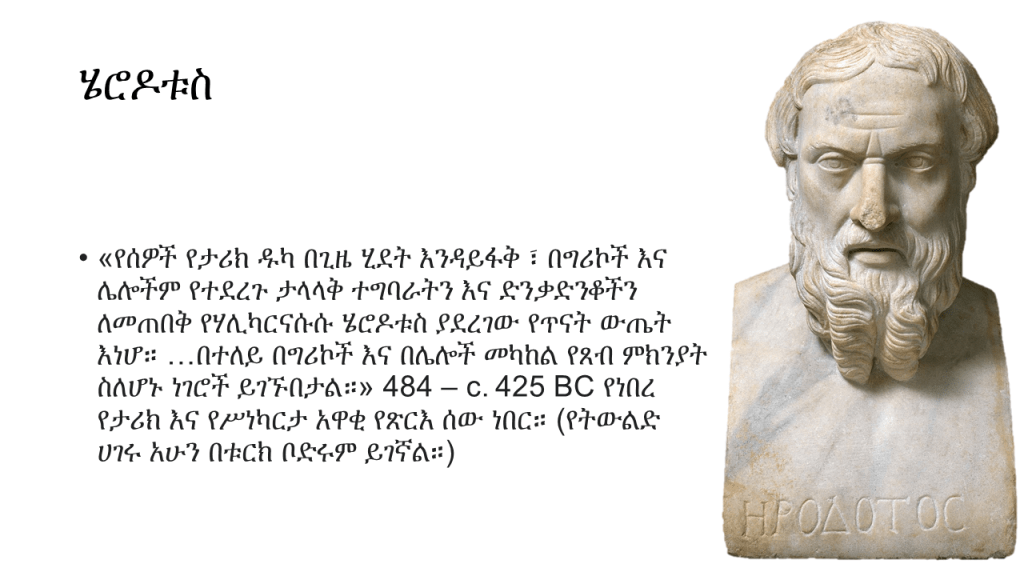
በሄሮዱቱስ የታሪክ መጽሐፍ ኢትዮጵያውያን ከዋነኛ የታሪክ ተዋናዮች ውስጥ ናቸው። የሚከተሉት አንቀጾች ከሄሮዱቱስ የታሪክ መጽሐፍ የተተረጎሙ ኢትዮፕያውያንን የሚመለከቱ ትረካዎች ናቸው። ሄሮዶቱስ ከ፬፻፹፬ ቅልክ – ፬፻፳፭ ቅልክ የነበረ ፣ በወቅቱ ባካባቢው የነበረውን ታሪክ እና ትርክት ሰንዶ ያለፈ የጽርእ ሰው ነበር።

Files

የዘርዓ ያዕቆብ ሐተታ

In the mid of the 18th century, a catholic missionary that traveled to Ethiopia would claim to have found two books of philosophy that were written in Geez-Hateta Zer’a Yaekob (the treatise of Zer’a Yaekob) and Hateta Wolde Heywot (the treatise of Wolde Heywet). The former was supposed to have been written in the 1660’s. He sent the books to a scholar in France who studied the books. The books were received with surprise and were also translated into several languages. Some of the scholars that studied the books would later doubt the authenticity of the books and the interest in them subsided until another scholar of philosophy of Canadian origin, Claude Sumner, rekindled the interest by publishing several scientific articles on the philosophy of Zer’a Yaekob.
The writer heard about the treatise of Zer’a Yaekob but didn’t have the chance to study them until the writer got a copy of a book containing both Zer’a Yaekob’s and Wolde Heywet’s Hateta’s back in 2012. The book was in Geez. The writer invested sometime into them then in spite of limited skill in Geez. The writer could translate Zer’a Yaekob’s Hateta and release the translations for encouraging discussion on the treatise in 2013. Zer’a Yaekob’s Hateta has also been translated into Amharic in 2014 by the well-known scholar, the late professor Getachew Haile. In this document, the writer presents a draft document containing the writer’s Amharic translation of the full treatise of Zer’a Yaekob with some English excerpts from treatise of Zer’a Yaekob and of Wolde Heywet.

https://zenodo.org/records/8330273

The search for the absolute in the physical realm; a note on the theory of light and relativity

Everything is relative, nothing is absolute” seems to have gained a wide acceptance i modern physics; at least in motion of bodies. But if absolute is something reference frame independent, I say modern physics has found one – the speed of light. This is one of the most interesting journeys of man’s search for meaning and order in the physical realm. In this short note the writer presents the historical developments of the exploration.

https://zenodo.org/records/8368874

ጊዜ ፣ የኢትዮጵያውያን የዘመን አቆጣጠር ቀመር እና የዘመናዊ ሥነፈለክ መንደርደሪያዎች

Calendar is one of the pillars of human civilization. In his pursuit of designing a system of measuring and keeping time, man raised his head to the heavens. He observed the movement of the heavenly bodies and tried to decipher the laws that govern them. His continuous efforts and book keeping allowed him to identify the cyclic nature of their movements. From those, he defined measurements of time that helped him keep the days, the months, the years and other periods of time. This made the making and fine tuning of most calendars to be closely linked with astronomy and astrology. In this article, we will present and discuss algorithms of the Ethiopian calendar. In the same thread, we will look into and discuss the two main references of the Ethiopian calendar, the book of Enoch and the book of Abushaker. We will then look into early precursors of modern astronomy for framing the subject matter from within the context of astronomy. Finally, some more clarifications that contain algorithms for using the Ethiopian Calendar , and Visual Basic programmes and the Geez numerals in the Microsoft Excel are appended.

https://zenodo.org/records/8335862

Introduce Yourself (Example Post)

This is an example post, originally published as part of Blogging University. Enroll in one of our ten programs, and start your blog right.

You’re going to publish a post today. Don’t worry about how your blog looks. Don’t worry if you haven’t given it a name yet, or you’re feeling overwhelmed. Just click the “New Post” button, and tell us why you’re here.

Why do this?

  • Because it gives new readers context. What are you about? Why should they read your blog?
  • Because it will help you focus you own ideas about your blog and what you’d like to do with it.

The post can be short or long, a personal intro to your life or a bloggy mission statement, a manifesto for the future or a simple outline of your the types of things you hope to publish.

To help you get started, here are a few questions:

  • Why are you blogging publicly, rather than keeping a personal journal?
  • What topics do you think you’ll write about?
  • Who would you love to connect with via your blog?
  • If you blog successfully throughout the next year, what would you hope to have accomplished?

You’re not locked into any of this; one of the wonderful things about blogs is how they constantly evolve as we learn, grow, and interact with one another — but it’s good to know where and why you started, and articulating your goals may just give you a few other post ideas.

Can’t think how to get started? Just write the first thing that pops into your head. Anne Lamott, author of a book on writing we love, says that you need to give yourself permission to write a “crappy first draft”. Anne makes a great point — just start writing, and worry about editing it later.

When you’re ready to publish, give your post three to five tags that describe your blog’s focus — writing, photography, fiction, parenting, food, cars, movies, sports, whatever. These tags will help others who care about your topics find you in the Reader. Make sure one of the tags is “zerotohero,” so other new bloggers can find you, too.