The Abushakir tradition contains a remarkably precise system for measuring time. Days are divided through a sexagesimal, or base-60, system into progressively smaller units. The same mathematical framework can describe from a small duration (such as the duration of a heartbeat) to months and years.
A day contains ፷ ኬክሮስ, making ፩ ኬክሮስ equivalent to 24 minutes. Each unit that follows is one-sixtieth of the preceding one:
፩ ኬክሮስ = 24 minutes
፩ ካልዒት = 24 seconds
፩ ሣልሲት = 0.4 seconds
፩ ራብዒት ≈ 6.67 milliseconds
፩ ሓምሲት ≈ 111 microseconds
፩ ሳድሲት ≈ 1.85 microseconds
The smallest of these units, ሳድሲት (sādsit), is just 1/540,000 of a second, or approximately 1.85 microseconds. The sequence can be extended still further—to ሳብኢት, ሥሙንቲት, ተሰዓቲት, and beyond—allowing mathematically ever smaller intervals of time to be expressed.
Time and the rhythms of life
These tiny units become easier to appreciate when compared with familiar natural rhythms.
- A period of ፲፭ ራብዒት (0.1 second) is approximately the duration of the blink of an eye.
- An አፍታ (afta), a brief interval associated with an adult, is given as ፲ ሣልሲት (4 seconds), roughly comparable to the interval between two blinks.
- The duration associated with an adult heartbeat is approximately ፩ ተግማሽ to ፪ ተግማሽ ሣልሲት (0.6–1.0 second).
The same numerical system used to describe these fleeting moments can then be extended upward to measure days, months, years, and astronomical cycles.
The length of the year
The length of the solar year is:
፫፻፷፭ ዕለታት ከ፲፭ ኬክሮስ ፮ ካልዒት ፭ ሣልሲት
(365 days, 6 hours, 2 minutes, 2 seconds)
The Ethiopian calendar divides the ordinary year into ፲፪ months of ፴ days each. These twelve months account for 360 days. The remaining days form the short thirteenth month, ጳጉሜን (Pagumen).
Pagumen normally contains ፭ days. The additional ፲፭ ኬክሮስ (6 hours) in each solar year accumulates until, after ፬ years, it becomes one complete additional day. Pagumen consequently contains ፮ days in a leap year.
But the calculated year contains a small amount beyond those six hours: ፮ ካልዒት ፭ ሣልሲት (2 minutes, 2 seconds). If accumulated over a sufficiently long period, this residual fraction would produce another calendrical correction. Over ፮፻ years, it would amount to approximately another day, theoretically producing a Pagumen of seven days. Whether such a correction was historically incorporated into the Ethiopian calendar is uncertain.
The daily course of the Moon
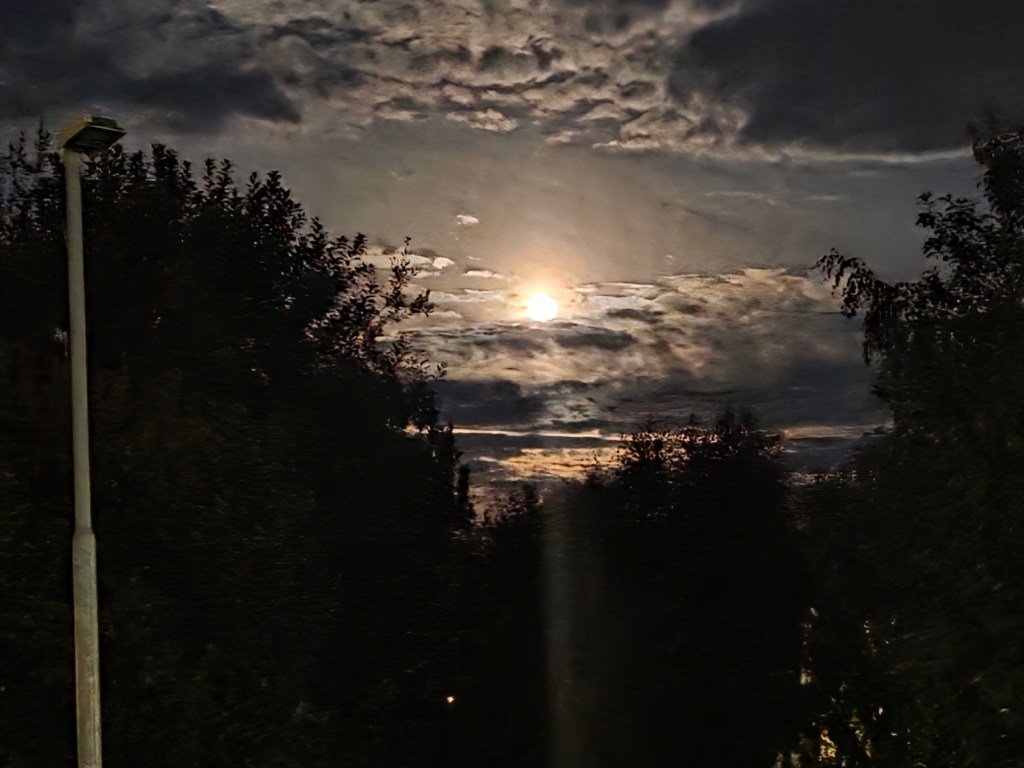
The Moon’s daily course measured against the solar day is:
፶፱ ኬክሮስ ፫ ካልዒት ፵ ሣልሲት ፲፮ ራብዒት ፲፰ ሓምሲት ፵፰ ሳድሲት
(approximately 23 hours, 37 minutes, 28.11 seconds)
A complete solar day consists of ፷ ኬክሮስ (24 hours). The Moon’s daily course therefore falls short of a solar day by:
፶፮ ካልዒት ፲፱ ሣልሲት ፵፫ ራብዒት ፵፩ ሓምሲት ፲፪ ሳድሲት
(approximately 22 minutes, 31.89 seconds)
This shortfall is called ሕጸጽ, the deficiency or difference between the calculated period and the complete unit against which it is being measured.
Over ፲፭ days, the Moon’s course amounts to:
፲፬ ዕለት ፵፭ ኬክሮስ ፶፭ ካልዒት ፬ ሣልሲት ፬ ራብዒት ፵፪ ሓምሲት
(approximately 14 days, 18 hours, 22 minutes, 1.63 seconds)
The remaining amount needed to complete fifteen solar days is:
፲፬ ኬክሮስ ፬ ካልዒት ፭ ሣልሲት ፶፭ ራብዒት ፲፰ ሓምሲት
(approximately 5 hours, 37 minutes, 38.37 seconds)
The lunar month
A complete lunar month is:
፳፱ ዕለት ፴፩ ኬክሮስ ፶ ካልዒት ፰ ሣልሲት ፱ ራብዒት ፳፬ ሓምሲት
(approximately 29 days, 12 hours, 44 minutes, 3.26 seconds)
It therefore falls short of thirty complete days by:
፳፰ ኬክሮስ ፱ ካልዒት ፶፩ ሣልሲት ፶ ራብዒት ፴፮ ሓምሲት
(approximately 11 hours, 15 minutes, 56.74 seconds)
The traditional value for the lunar month is extraordinarily close to the modern mean synodic month. The difference is approximately:
፩ ሣልሲት ፱ ራብዒት ፲ ሳድሲት
(approximately 0.46 seconds)
In other words, the difference between the traditional value and the modern value is less than half a second over an entire lunar month.
The lunar year
Twelve lunar months produce a lunar year of:
፫፻፶፬ ዕለት ከ፳፪ ኬክሮስ ፩ ካልዒት ፴፯ ሣልሲት ፶፪ ራብዒት ፵፰ ሓምሲት
(354 days, 8 hours, 48 minutes, 39.15 seconds)
This is shorter than the solar year by:
፲ ዕለት ከ፴፯ ኬክሮስ ፶፰ ካልዒት ፳፪ ሣልሲት ፯ ራብዒት ፲፪ ሓምሲት
(10 days, 15 hours, 11 minutes, 20.85 seconds)
This difference explains one of the fundamental problems of lunisolar calendars. Twelve lunar months do not make a complete solar year, while thirteen lunar months exceed it. A larger cycle is therefore needed to bring the movements of the Sun and Moon back into close alignment.
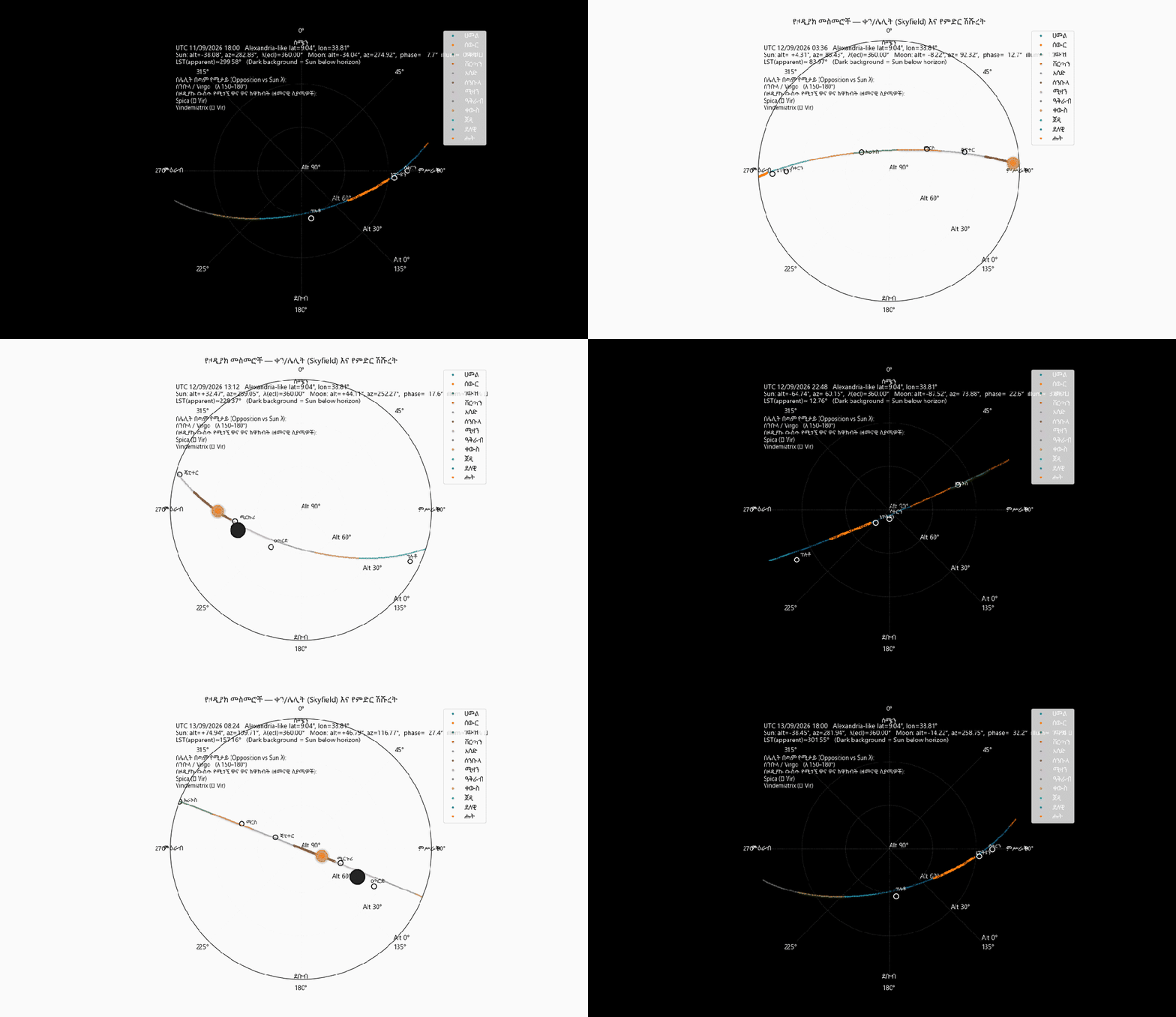
(The text Alexandria is not correct. The coordinate (latitude, longitude) values are for the Adis Ababa observatory. The figure shows the Zodiac and the position of the planets as seen by an observer situated at the Adis Ababa observatory from 11-13. 09 .2026 of the Gregorian calendar.
ዐውደ አበቅቴ — the nineteen-year cycle
After ፪፻፴፭ lunar months, the phases of the Moon return to approximately the same position within the solar calendar. These ፪፻፴፭ months consist of ፻፳፭ long months of ፴ days and ፻፲ short months of ፳፱ days.
Their duration is approximately:
፷፱፻፴፱ ዕለታት ከ፵፩ ኬክሮስ ፳፪ ካልዒት ፶፯ ሣልሲት ፶፱ ራብዒት
(approximately 6,939 days, 16 hours, 33 minutes, 11.19 seconds).
A more precise value given for the same 235-month lunar cycle is:
፷፱፻፴፱ ዕለታት ከ፵፩ ኬክሮስ ፲፯ ካልዒት ፵፰ ሣልሲት
(6,939 days, 16 hours, 31 minutes, 7.2 seconds).
These ፪፻፴፭ lunar months correspond remarkably closely to ፲፱ solar years. Since a solar year is longer than twelve lunar months but shorter than thirteen, the nineteen-year period contains ፲፪ years of twelve lunar months and ፯ years of thirteen lunar months, giving a total of 235 months.
Ethiopian scholars call this cycle ዐውደ አበቅቴ (Awde Abəqte), also known as the Minor Computus. The Abəqte therefore completes one full cycle every ፲፱ years.
In Western astronomical tradition, the corresponding nineteen-year period is known as the Metonic cycle, named after Meton of Athens. Meton approximated its duration as ፷፱፻፵ days. The Babylonians were already using the nineteen-year cycle from approximately ፮፻ BC. In the Babylonian and Hebrew arrangement, the additional lunar month occurs in the ፫rd, ፮th, ፰th, ፲፩th, ፲፬th, ፲፯th, and ፲፱th years of the cycle.
For comparison, ፲፱ tropical years amount to:
፷፱፻፴፱ ዕለታት ከ፴፮ ኬክሮስ ፯ ካልዒት ፲፫ ሣልሲት
(6,939 days, 14 hours, 26 minutes, 53.2 seconds).
Compared with the more precise lunar value above, the difference is:
፲ ኬክሮስ ፲ ካልዒት ፴፮ ሣልሲት
(4 hours, 4 minutes, 14.4 seconds).
Using the Abushakir value for the solar year, however, the difference between ፪፻፴፭ lunar months and ፲፱ solar years is only:
፮ ኬክሮስ ፴፬ ካልዒት ፴፰ ሣልሲት ፲፩ ራብዒት
(approximately 2 hours, 37 minutes, 51.27 seconds).
The correspondence between 235 lunar months and nineteen solar years is therefore extremely close, though not exact. This small discrepancy (ሕጸጽ) gradually accumulates over longer periods.
Using the Abushakir values, twelve lunar months fall short of one solar year by:
፲ ዕለት ፶፫ ኬክሮስ ፬ ካልዒት ፳፯ ሣልሲት ፯ ራብዒት ፲፪ ሓምሲት
(approximately 10 days, 21 hours, 13 minutes, 46.85 seconds).
This annual difference explains the need for the seven additional lunar months distributed throughout each nineteen-year cycle.
Taking ፬ Awde Abəqte cycles together, and defining the solar year as:
፫፻፷፭ ዕለታት ከ፲፭ ኬክሮስ
(365 days and 6 hours),
the calculation reaches ፸፭ years, with a remainder of:
፫፻፷፭ ዕለታት ከ፳፰ ካልዒት ፵፯ ሣልሲት ፲፮ ራብዒት
(approximately 365 days, 11 minutes, 30.91 seconds).
From a heartbeat to nineteen years
Abushakir’s measurement system (or the more precisely the measurement system adopted by Abushakir) can describe both enormous astronomical cycles and extraordinarily small intervals of time.
The hierarchy begins:
ዕለት → ኬክሮስ → ካልዒት → ሣልሲት → ራብዒት → ሓምሲት → ሳድሲት
Each step divides the preceding unit by sixty. Beginning with the day and continuing through these successive divisions eventually produces ሳድሲት, a unit equivalent to approximately 1.85 microseconds.
Yet the same system also reaches in the opposite direction: from days to lunar months, from lunar months to years, and from years to the ፲፱-year ዐውደ አበቅቴ.
Time can therefore be followed continuously from fractions of a heartbeat to the recurring cycles of the Sun and Moon—all within the same mathematical framework.
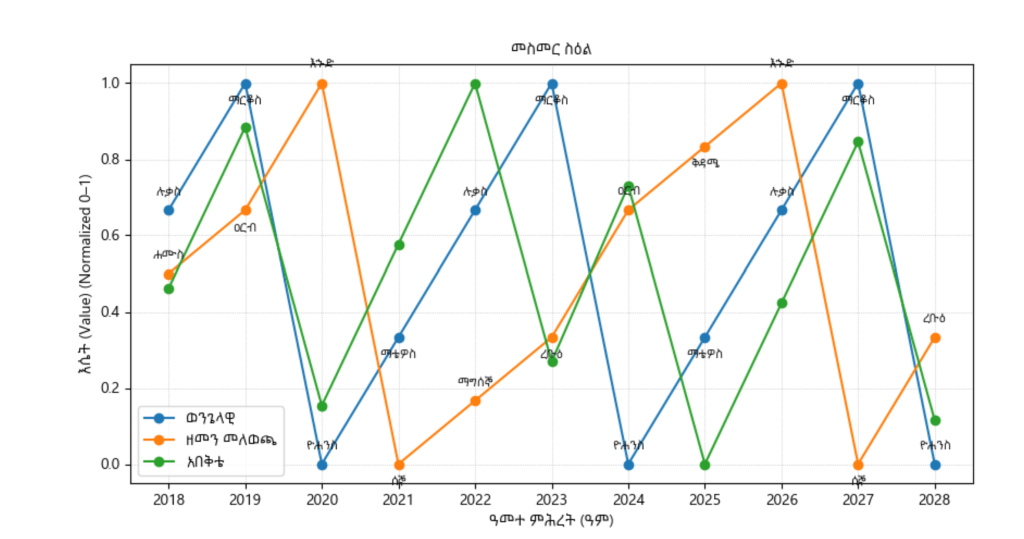
For more details please refer: ጊዜ ፣ የኢትዮጵያውያን የዘመን አቆጣጠር ቀመር እና የዘመናዊ ሥነፈለክ መንደርደሪያዎች | Zenodo