This report is contributed by Dr. Solomon Abedom and Dr.Mulugeta Bereded and originally reported at https://sway.cloud.microsoft/J7b6ATKn5YFPlADH?ref=Link&loc=endofstory
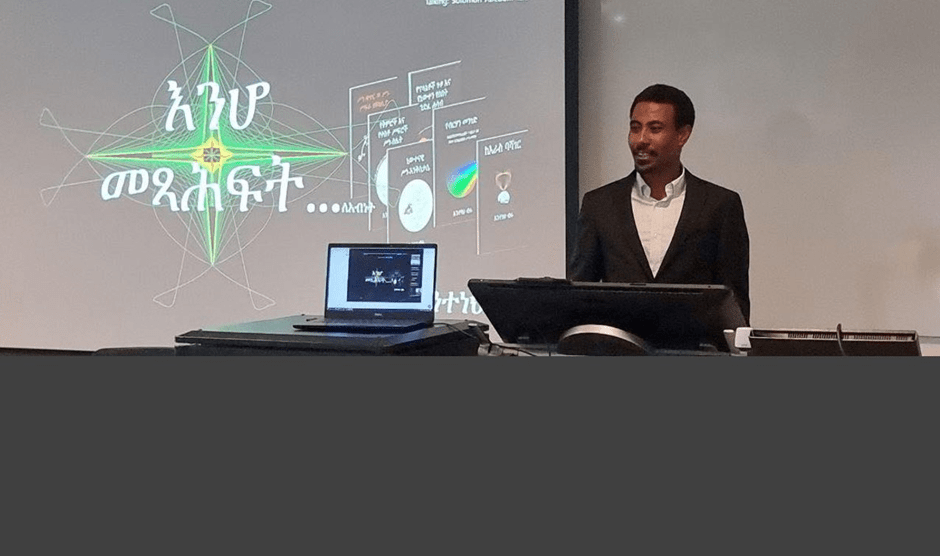
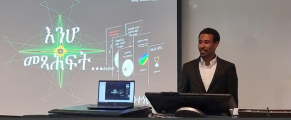
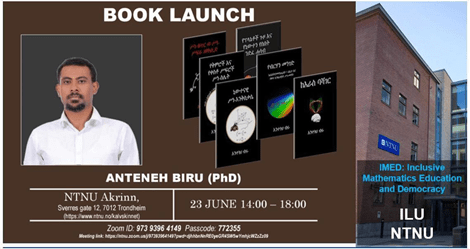
The research group Inclusive Mathematics Education and Democracy (IMED) at the Department of Teacher Education (ILU), together with the Ethiopian community in Trøndelag, hosted a book launch event at the Kalvskinnet campus, NTNU Akrinn, on June 23, 2024.
Dr. Antenh Biru, a Senior Geotechnical Engineer at the Norwegian Geotechnical Institute (NGI) and a graduate of the Department of Civil and Environmental Engineering at NTNU, has authored six books in the Amharic language, a language that is widely spoken and used at the medium of instruction at primary and junior schools in Ethiopia. The titles of his books are: “ሥነ ቁጥር ወ ሥነ-ሥፍራ ዘዩክሊድ” (on Numbers and Euclidean Geometry); “የቅምሮች እና የቀስቶ ሥፍሮች ሥነ-ስሌት” (on Calculus of scalar and vector-valued functions); “ኒውተናዊ ሥነ-እንቅስቃሴ” (on Newtonian motion); “የፕላኔቶች ጉዞ እና የኒውተን የስበት ንድፈ ሐሳብ” (on Planetary motion and Newton’s theory of gravity); “የብርሃን መንገድ” (on Electromagnetism, Vision, and the Special theory of relativity with emphasis on the latter); and “ከእራስ ባሻገር” (Beyond Self). An overview of Anteneh’s books, in Amharic can be found at the following link: https://antenehbiru.com/2024/05/26/book-launch/.
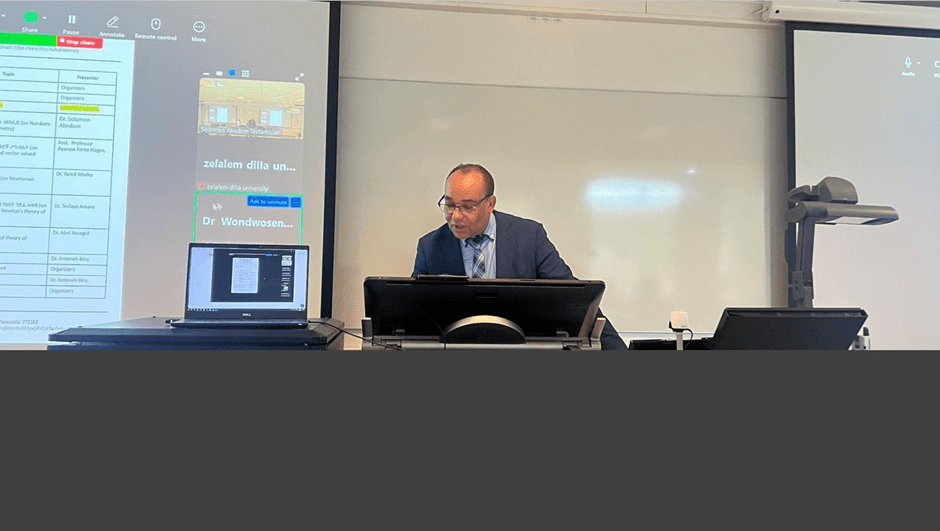
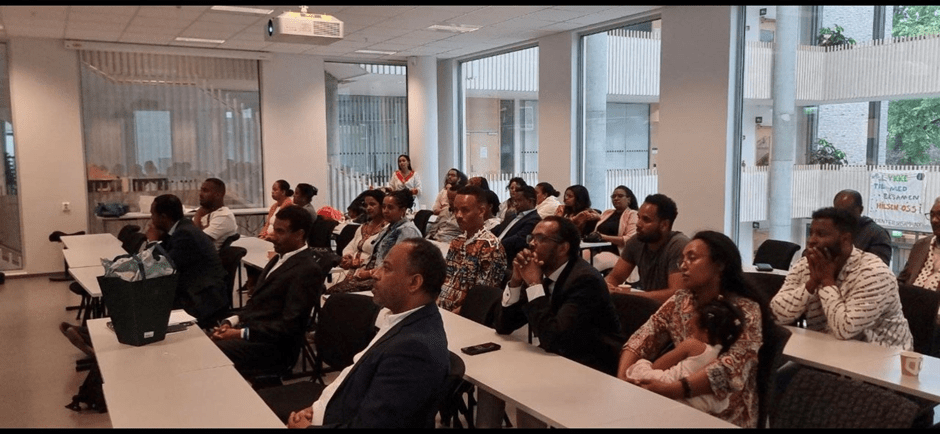
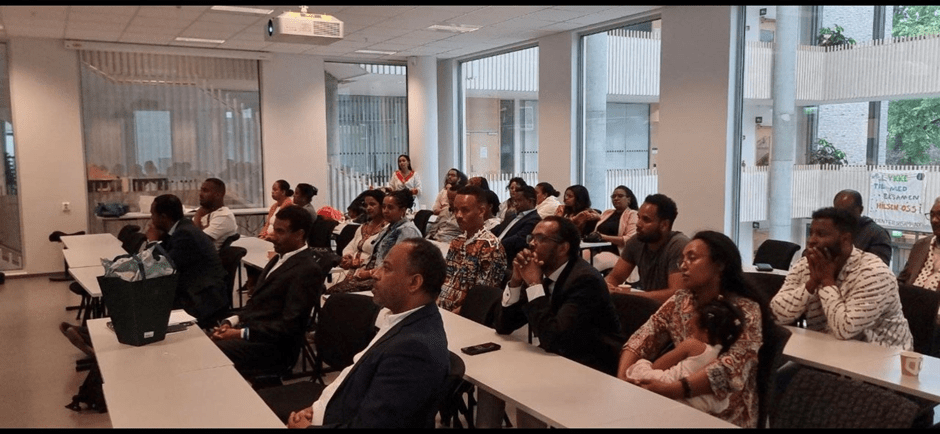
The first five books were reviewed and presented by five scholars: Dr. Solomon Abedom Tesfamicael, an associate professor at ILU, NTNU, Ayanaw Fente Hagos an Assistant Professor in Mathematics at Motlow State Community College, USA and founder of Utopia Maths Academy; Dr. Yared Worku, a research scientist at SINTEF, Dr. Tesfaye Amare, a research scientist at SINTEF and Dr. Abel Assegid, Senior Research and Development Engineer at Siemens Energy. The event was attended by more than 40 people in person, who are mainly from the Ethiopian community residing in Trondheim, and 32 participants online via Zoom meetings from different universities in Ethiopia, Norway, and the USA. The book launch event was chaired by Dr. Mulugeta Bereded Zelelew, a senior hydrologist and water resources engineer at Multiconsult Norway.
Dr. Mulugeta expressed his deep appreciation for the work of Dr. Anteneh as follows: Dr. Anteneh has a keen interest in a variety of subjects, including language, history, physics, mathematics, and philosophy. He has dedicated a significant amount of time to writing these books.
The Ethiopian education system is greatly dependent on foreign languages, which creates an obvious barrier to understanding the essential principles, practical application, and the process of knowledge transfer in subjects like mathematics, physics, and philosophy. I hold a strong conviction that accessing the fundamental principles of mathematics, physics, philosophy, and other subjects in one’s own native language cultivates a deeper understanding of these disciplines. This will enable students, educators, and others to express themselves authentically, thereby fostering a sturdy educational foundation. Moreover, it enhances communication and comprehension among scholars and empowers individuals to grasp complex concepts, think critically, and engage in meaningful dialogues on these subjects. The publication of these six books signifies not only a remarkable milestone in Dr. Anteneh’s achievements but also stands as a notable and exemplary contribution to enriching students, educators, scholars, and others. This, I believe, is a rare occasion that warrants celebration and recognition.
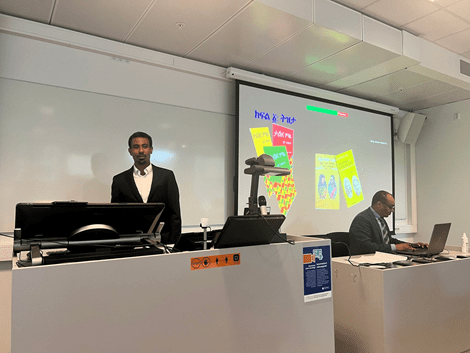
Dr. Solomon Abedom Tesfamicael, a member of the research group at IMED, ILU, presented his review of the book: “ሥነ ቁጥር ወ ሥነ ሥፍራ ዘዩክሊድ” (on Numbers and Euclidean Geometry), emphasizing the importance of such pioneering work in translating and presenting mathematical concepts and procedures, including some of the original works of Euclid’s book, in the Amharic language.
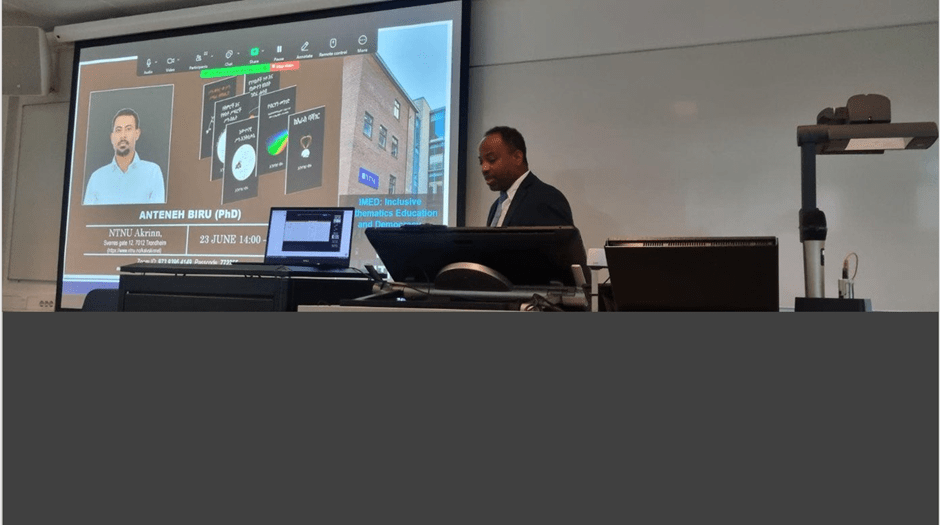
Dr. Solomon used the four perspectives that Barwell, R. (2014) used to describe Mathematics and language: The linguistic perspective, the Discursive perspective on mathematical cognition, the Socio-Political Perspective, and the Discourse of mathematics education research. From a linguistic perspective, Dr. Anteneh’s work presents the narrative style of written mathematics (in broad STEM fields) in the context of Amharic-speaking communities in a way that the text is related to the intended audience (Pimm & Sinclair, 2009). From a discursive perspective in mathematical cognition, providing learners with mathematical concepts in their own language offers the opportunity for children’s cognitive development, as Vygotsky’s theory asserts that language mediates between the individual and society. According to Sfrad A. (2001) and commognitive theory, “learning is grounded in the assumption that thinking can be usefully conceptualized as one’s communication with oneself.” Being able to engage in mathematical thinking in a mother tongue, in this case in the Amharic language, can help millions of children gain deeper knowledge and understanding of facts and further develop critical thinking and problem-solving abilities in a demanding world. From these vantage points, Dr. Anteneh has contributed extraordinary work for students, teachers, educators, and other stakeholders who have a deeper interest in engaging in doing mathematics.
The other four presenters were Assistant Professor Ayanaw, who reviewed the book “የቅምሮች እና የቀስቶ ሥፍሮች ሥነ-ስሌት” (on Calculus of scalar and vector-valued functions). Dr. Yared Worku reviewed the book “ኒውተናዊ ሥነ-እንቅስቃሴ” (on Newtonian motion). The fourth book, “የፕላኔቶች ጉዞ እና የኒውተን የስበት ንድፈ ሐሳብ” (on Planetary motion and Newton’s theory of gravity), was reviewed by Dr. Tesfaye Amare. The last book, “የብርሃን መንገድ” (on Electromagnetism, Vision, and the Special theory of relativity with emphasis on the latter), was reviewed by Dr. Abel Assegid.
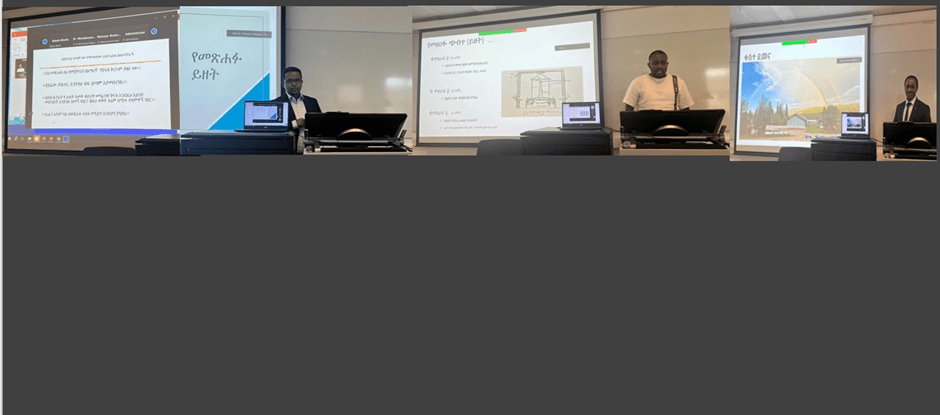
Assistant Professor Ayanaw mentioned that Dr. Anteneh’s work is a remarkable achievement. He emphasized that presenting the fundamental principles of mathematics in the Amharic language with such depth had never been done before. In addition, he added the following comments: “Thanks so much for allowing me to review this highly advanced mathematics book in Amharic. I have always wished for such a book for our country. This is a great start and initiative that I hope everyone will learn from, inspiring them to start writing in their own fields. One recommendation for Dr. Anteneh: In the future, instead of writing from scratch using multiple resources, I highly recommend selecting the most popular reference math or physics book and translating it into Amharic to reach more readers with less effort and resources. Also, if he could form a team of experts at his level, they could collaboratively produce more books together. I look forward to working with your team and Dr Anteneh.”
Amazed by the work, Dr. Yared mentioned his challenges in understanding the fundamental principles of mathematics and physics during his undergraduate studies in Ethiopia, and Dr. Anteneh’s work is one of the works that will help many to understand the fundamental principles of mathematics and physics in the native language of Amharic. Dr. Tesfaye highlighted that the fundamental principles of planetary motion and Newton’s theory of gravity are deeply analyzed and presented in the book. He also commented that symbols and nomenclatures used in the book are synchronized with well-accepted symbols and nomenclatures within the subject. This makes it easier to follow the detailed descriptions in the book and cross-reference the topics in books written in other languages. Dr. Abel said the book explains the fundamental principles of Electromagnetism, Vision, and the Special theory of relativity in detail in the Amharic language, which had never been done before. He also commented that adding a glossary of nomenclatures and symbols used in the book helps to understand the contents of the book.
In addition, other than his recent books, Dr. Anteneh Biru authored diversified books and articles (https://antenehbiru.com/). Dr. Anteneh also published his late father’s novel MSc thesis titled “Path Integrals in Quantum and Statistical Mechanics” in 2011. His father, Biru Tsegaye, completed his Master’s Degree from Addis Ababa University and later became a lecturer at AAU. Biru was admitted to Cincinnati University for a PhD, but suddenly felt ill and sadly passed away in 1997 at the young age of 31, while in preparation to travel to the US. This and his other distinguished contributions in Geotechnical Engineering were presented by Dr. Samson Abate at the closing of the book launch venue.
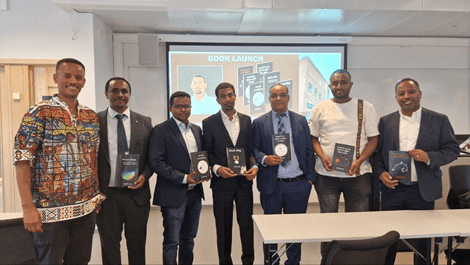
The Ethiopian community in Trøndelag presented a flower and a certificate to Dr. Anteneh Biru in recognition of his extraordinary efforts to provide learning opportunities in mathematics and physics for students, as well as for his active engagement with children in Trondheim.
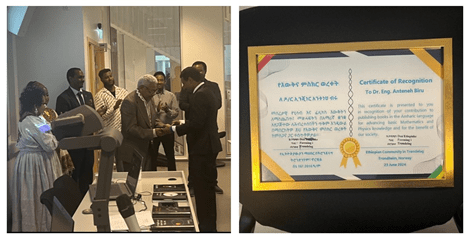
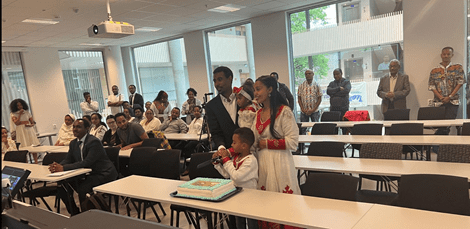
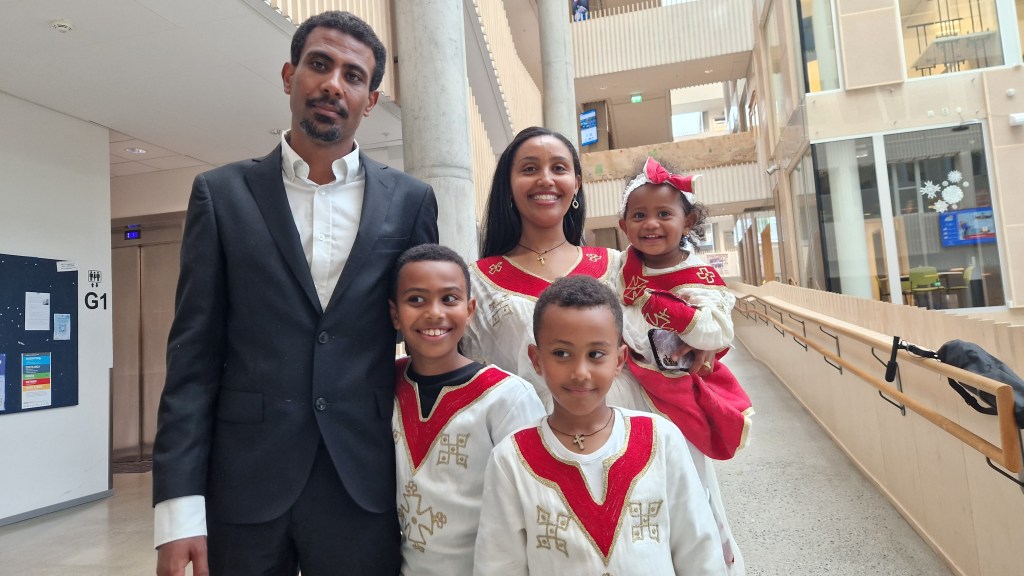
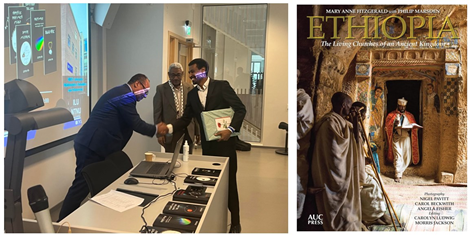
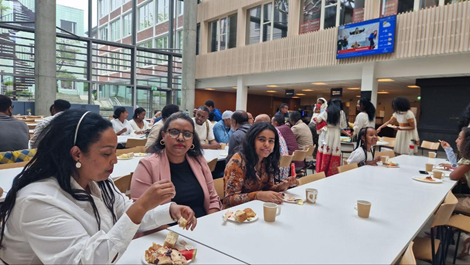
Participants of the Book Launch event.
 ዝንቅ - Multidisciplinary Forum